
Handcrafted decorative lighting since 1980 · Worldwide project support

0%

In 2026, Linear Pendants are becoming essential tools for balanced, efficient, and visually coherent interiors. Global buyers now compare more than appearance. They examine light distribution, installation methods, energy performance, material quality, and maintenance access. A pendant above a long dining table should illuminate every place setting without creating harsh reflections. In a hotel lobby, the same fixture must support wayfinding, comfort, and strong visual identity.

Lighting designer and author Randall Whitehead has said, “Lighting is the jewelry of architecture.” His observation explains why Linear Pendants deserve careful selection. They are functional products, yet their proportions and finishes can define an entire space. This guide explores suspended linear lights, LED bar pendants, modular systems, architectural pendants, and decorative multi-light designs. Each type suits different ceilings, room dimensions, and lighting goals.

Practical experience matters here. A narrow beam may look dramatic but leave table edges dim. A diffuser can soften glare, although it may reduce perceived brightness. Buyers should verify color rendering, dimming compatibility, driver quality, voltage requirements, and relevant regional certifications. Specifications can appear impressive. Real performance still depends on installation and control systems. No single product fits every market. That is easy to forget.

The following overview helps architects, distributors, hospitality teams, and homeowners compare Linear Pendants with greater confidence. It also recognizes an uncomfortable truth: design trends change faster than replacement parts. Reliable sourcing, documented testing, warranty clarity, and accessible technical support remain as important as visual appeal. The best choice is rarely the most fashionable one. It is the fixture that performs consistently after the showroom excitement fades.
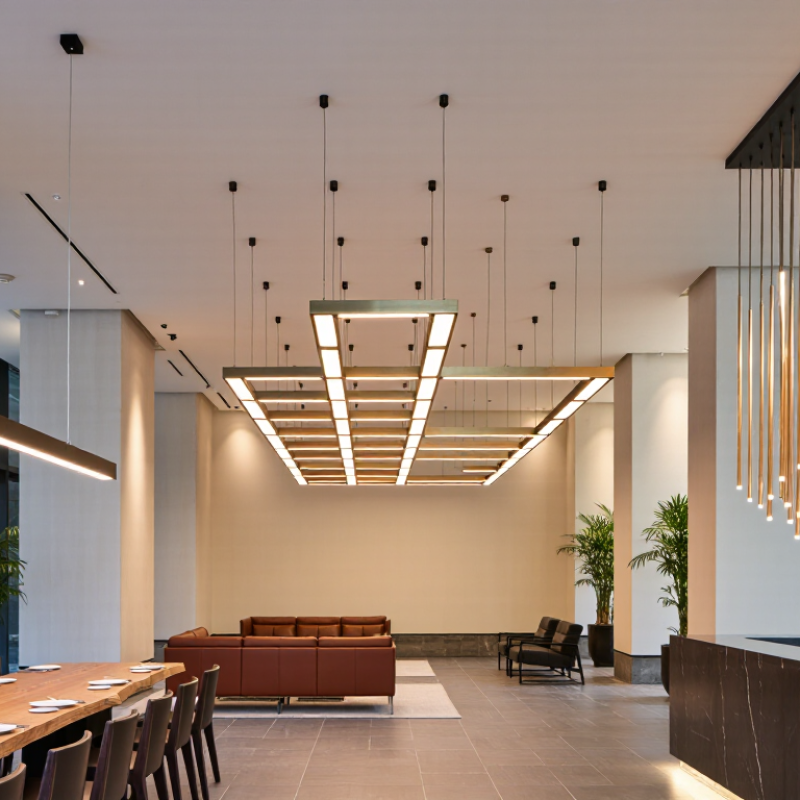
2026 Top Types of Linear Pendants for Global Buyers

What Are Linear Pendants and Why Are They Popular in 2026?

Linear pendants are suspended light fixtures with a long, narrow profile. They usually hang above dining tables, kitchen islands, workstations, or reception counters. In practical terms, they spread light across a wider area than a single pendant. Common types include fixed linear bars, adjustable systems, modular designs, and diffused pendants with soft covers. Some models provide direct light, while others combine upward and downward illumination.

Their popularity in 2026 comes from changing interior layouts. Open-plan offices, compact apartments, and flexible retail spaces need focused light without visual clutter. Linear pendants create clean sightlines and help define zones beneath high ceilings. Many buyers also prefer efficient LED sources, dimming options, and adjustable color temperatures. These features support work, dining, and relaxed evening use. However, a stylish fixture cannot solve every lighting problem. Poor spacing may create glare or dark corners.

Tips: Check the ceiling height, beam distribution, and mounting method before ordering. Confirm voltage, dimming compatibility, and regional safety certifications. For offices, neutral white light may improve visual comfort. For restaurants, warmer light often feels more inviting. Ask for installation drawings and photometric data. Small details matter. I have seen attractive installations fail because the suspension length was guessed rather than measured. Global buyers should compare warranty terms, replacement parts, and installation support, not only the fixture’s appearance.

Key Types of Linear Pendants for Different Interior Styles

Linear pendants now serve different interior moods, not one fixed design language. Slim aluminum bars suit minimalist rooms with pale walls, glass tables, and concealed wiring. Their simple profile keeps sightlines open above a 1.8-metre dining table. Warm wood details work better in Scandinavian and Japandi spaces. They soften hard surfaces without adding visual noise.

Industrial interiors often need black metal, visible joints, and a wider diffuser. A 1200–1500-millimetre pendant can anchor a long table without overwhelming nearby shelving. For classic interiors, aged brass tones and opal glass create gentler reflections. In hospitality-style rooms, clustered linear pendants add rhythm above counters and islands. However, symmetry can feel too formal. Slight spacing differences may create a more lived-in result.

Energy performance also affects purchasing decisions. The International Energy Agency reported that lighting represents about 15% of global electricity consumption. The U.S. Department of Energy states that LED lighting can use at least 75% less energy than incandescent lighting and last much longer. Buyers should check lumen output, colour temperature, dimming compatibility, and replacement access. A 2700K setting often suits bedrooms and lounges, while 3000K supports kitchens and work areas. I still find some “minimal” pendants too cold; material texture matters as much as efficiency.

2026 Top Types of Linear Pendants for Global Buyers

Key linear pendant types are compared by their typical suitability for major interior styles. The 1–5 design-fit index reflects commonly used combinations in residential and commercial interiors, not company or brand performance.

Essential Materials, Shapes, and Lighting Technologies

2026 Top Types of Linear Pendants for Global Buyers

Material selection now shapes both appearance and lifecycle value. Extruded aluminum supports slim bodies and effective heat dissipation. Powder-coated steel offers stronger impact resistance for hospitality and retail interiors. Frosted glass creates a softer glow, while acrylic reduces weight and shipping risk. Wood veneer adds warmth, but its color can vary between batches. That imperfection deserves honest specification.

Shapes should follow the room, not fashion alone. Rectangular pendants suit long tables and open offices. Cylindrical profiles create a quieter, more architectural line. Continuous suspended systems reduce visual breaks across large ceilings.

The Illuminating Engineering Society recommends checking luminance, glare, and task requirements together. A bright fixture is not automatically a comfortable one. UGR data, optical diffusion, and suspension height remain practical buying checks.

Lighting technology is moving beyond simple on-off control. The International Energy Agency reports that lighting uses about 15% of global electricity. Efficient LED systems therefore matter at building scale.

The U.S. Department of Energy’s solid-state lighting research shows laboratory LED efficacy can exceed 200 lumens per watt, although complete fixtures perform lower.

Buyers should compare delivered lumens, efficacy, color consistency, and driver life. DALI-2 compatibility, dimming, occupancy sensors, and tunable white can improve flexibility. Yet connected controls may add commissioning effort and training costs. That trade-off is often underestimated. Manufacturer claims still require independent photometric files and regional compliance documents.

How to Choose Linear Pendants for Residential and Commercial Spaces

Choosing linear pendants begins with the room’s purpose, not the fixture’s appearance. In dining rooms, a warm 2700K to 3000K light creates a relaxed atmosphere. Kitchens often need 3000K to 4000K for clearer food preparation. For offices, select comfortable, low-glare illumination with a high color rendering index.

Measure twice. A pendant should usually be shorter than the table, leaving clear space at both ends.

Different spaces require different pendant types. A single linear pendant suits compact dining areas and kitchen islands. Multi-light designs spread illumination across longer surfaces.

Adjustable-head pendants help commercial counters, reception desks, and display tables. For an eight-seat table, a fixture around two-thirds of the tabletop length often appears balanced.

Ceiling height also matters. Keep the lower edge approximately 75 to 90 centimeters above a dining surface.

During installation planning, check weight, suspension length, dimming compatibility, and maintenance access. Commercial projects may need stronger materials, replaceable drivers, and lighting controls that support long operating hours. Residential users may value softer diffusion and quieter visual details.

I once chose a striking pendant that looked oversized after installation. The lesson was simple: drawings can hide scale. Review a full-size paper outline before ordering. Also inspect shadows on nearby walls, because attractive fixtures can still create uncomfortable contrast.

Global Buying Factors: Quality, Compliance, and Installation Needs

2026 Top Types of Linear Pendants for Global Buyers

Global Buying Factors: Quality, Compliance, and Installation Needs

Linear pendants now serve offices, retail counters, hospitality spaces, and long dining tables. Buyers often choose direct-light, indirect-light, or direct-indirect models. The right type depends on glare control, ceiling height, and task requirements. A narrow beam may suit a counter, while wide diffusion supports open work areas. Check the housing closely. Rigid aluminum, even seams, and secure end caps usually indicate better manufacturing discipline.

Light quality needs measurable proof. Ask for photometric files, color consistency data, flicker performance, and lumen maintenance figures. A high color rendering value alone does not guarantee comfortable light. Thermal management matters, especially in warm interiors. Request driver details, dimming compatibility, and test samples before a large order. One sample is useful, but it can still hide production variation.

Compliance must match the installation market. Confirm applicable electrical, fire, energy, and material requirements with qualified local professionals. Documents should identify the exact model, not a similar family. Installation planning is equally practical. Verify ceiling structure, suspension length, power entry points, emergency lighting needs, and replacement access. Some projects fail because the canopy does not fit the junction box. That detail is easy to miss. Buyers should also confirm packaging strength, spare parts, wiring instructions, and warranty terms. Perfect specifications are not enough; field conditions often expose weaknesses that factory documents overlook.

2026 Top Types of Linear Pendants for Global Buyers - Global Buying Factors: Quality, Compliance, and Installation Needs

Linear Pendant Type Typical Application Typical Power Range Typical Luminous Efficacy Typical CCT Options Color Quality Common Light Distribution Quality Checkpoints Compliance Evidence to Request Installation Needs Best Buying Fit
Direct-Emission Linear Pendant Open offices, classrooms, retail areas, corridors 20–80 W per metre 90–140 lm/W 2700 K, 3000 K, 3500 K, 4000 K, 5000 K CRI 80+ standard; CRI 90+ for premium visual environments Direct, usually 60°–120° beam options Uniform diffuser, low LED pixel visibility, stable color consistency, reliable driver thermal management Applicable electrical-safety and EMC reports; regional marking such as CE, UKCA, or UL/CSA where required; RoHS documentation when applicable Suspension cables, ceiling anchors, power feed, height adjustment, and access for driver replacement Cost-efficient general lighting with strong illuminance on horizontal work surfaces
Direct/Indirect Linear Pendant Executive offices, meeting rooms, libraries, hospitality interiors 25–100 W per metre 80–125 lm/W combined output 2700 K, 3000 K, 3500 K, 4000 K CRI 80+; CRI 90+ commonly selected for high-end interiors Separate upward and downward components, often independently dimmable Balanced uplight/downlight ratio, glare control, diffuser fit, absence of dark sections at joins Photometric files, glare data where specified, electrical-safety and EMC documentation, dimming compatibility evidence Two-sided cable suspension, accurate leveling, separate control wiring when required, adequate ceiling void clearance Projects seeking visual comfort, ceiling brightness, and reduced perceived contrast
Microprismatic Low-Glare Pendant Computer workstations, control rooms, education and healthcare offices 25–75 W per metre 75–115 lm/W 3000 K, 3500 K, 4000 K CRI 80+ or CRI 90+; consistent binning should be specified Controlled direct distribution with optical glare reduction UGR performance based on the actual optical system and layout, clean prism surface, no visible hot spots Verified photometric data, glare assessment for the project layout, electrical-safety and EMC reports Precise suspension height, careful handling of the optical panel, commissioning of dimming controls when used Office and screen-based applications where glare control is a major purchasing factor
Acoustic Linear Pendant Open-plan offices, coworking spaces, restaurants, libraries 20–70 W per metre 60–110 lm/W 2700 K, 3000 K, 3500 K, 4000 K CRI 80+; higher CRI available in many configurations Direct or direct/indirect, with sound-absorbing outer panels Panel density and thickness, clean edges, acoustic test method, resistance to sagging and color fading Lighting compliance documents plus material fire classification and acoustic test reports where required by the project Additional load-bearing support, careful panel protection, coordinated suspension layout, ceiling access Projects combining illumination with reverberation control and interior design requirements
Continuous Modular Linear System Large offices, supermarkets, transport areas, commercial interiors 30–120 W per metre 100–160 lm/W 3000 K, 3500 K, 4000 K, 5000 K CRI 80+; CRI 90+ for retail and display-oriented zones Direct, direct/indirect, asymmetric, or aisle-specific optics Joint uniformity, mechanical alignment, replaceable modules, driver accessibility, thermal performance in long runs System-level electrical and photometric documentation; emergency-lighting documentation if emergency modules are included Detailed layout, suspension-point coordination, continuous power wiring, correct joining sequence, site-level testing Large projects requiring repeatable lines, scalable installation, and simplified inventory
Decorative Tubular or Cylinder Linear Pendant Hospitality, residential common areas, restaurants, feature spaces 10–45 W per metre 70–120 lm/W 2200 K, 2700 K, 3000 K, 3500 K CRI 90+ often preferred for decorative and hospitality environments Narrow, diffused, or decorative omnidirectional emission Surface finish, tube straightness, end-cap fit, diffuser uniformity, suspension strength, visible cable quality Electrical-safety and EMC evidence, material declarations, and regional marking appropriate to the destination market Fragile-finish protection, accurate spacing, secure ceiling anchors, and coordination with decorative control systems Design-led projects where appearance, color rendering, and visual detailing outweigh maximum efficacy
Smart-Dimmable Linear Pendant Modern offices, hospitality, education, energy-managed commercial buildings 20–100 W per metre 80–145 lm/W 2700–6500 K for tunable-white versions; fixed 3000 K or 4000 K also common CRI 80+; verify color consistency across the full dimming and tuning range Direct or direct/indirect with 0–10 V, DALI-2, phase-cut, or wireless control options Flicker behavior, minimum dimming level, driver compatibility, control-system interoperability, firmware stability Control-device compliance, EMC testing, cybersecurity or network documentation when connected, and regional electrical approvals Separate control wiring or gateway setup, addressing, commissioning, testing, and user training Buyers prioritizing energy management, scene control, occupancy response, or human-centric lighting functions
Moisture-Resistant Linear Pendant Covered outdoor areas, food-service zones, workshops, humid interiors 20–90 W per metre 90–140 lm/W 3000 K, 4000 K, 5000 K CRI 80+ for general service areas Wide direct distribution for uniform area coverage IP rating consistency, gasket quality, corrosion resistance, cable-gland sealing, temperature range, cleanability Ingress-protection test evidence, corrosion or material data where applicable, electrical-safety and EMC documentation Weather-suitable anchors, sealed cable entry, equipotential bonding where required, and protection from direct water jets unless rated Locations where humidity, dust, cleaning procedures, or occasional splashing exceed normal office conditions
Buyer note: The performance figures are typical market ranges for specification and comparison purposes, not guaranteed values. Final selection should be based on the project photometric calculation, local electrical rules, required ingress and fire classifications, ceiling structure, control protocol, warranty terms, spare-part availability, and installation conditions. Ask for test reports and declarations that match the exact model, configuration, and destination market.

FAQS

What is a linear pendant?

It is a long, narrow light fixture suspended from the ceiling. It spreads light across tables, counters, or workstations. Some designs shine downward, upward, or both.

Why are linear pendants popular in 2026?

Open layouts need focused lighting without visual clutter. These fixtures define zones beneath high ceilings. They also suit compact apartments and flexible work areas. Clean lines help. Sometimes too much minimalism feels cold.

Where can linear pendants be used?

Common locations include dining tables, kitchen islands, desks, and reception counters. Choose the fixture according to the room’s purpose. A decorative model may not provide enough task lighting.

What color temperature works best?

Use 2700K to 3000K for warm dining areas and relaxed evenings. Kitchens often benefit from 3000K to 4000K. Offices usually need comfortable neutral white light. Personal preference still matters.

How long should a linear pendant be?

The pendant should usually be shorter than the table. For an eight-seat table, two-thirds of the tabletop length often looks balanced. Leave visible space at both ends. Measure twice.

How high should it hang above a table?

Keep the lower edge about 75 to 90 centimeters above the tabletop. Check sightlines before final installation. A paper outline can reveal poor scale. Draw it first.

What should buyers check before ordering?

Check ceiling height, beam distribution, weight, and suspension length. Confirm voltage, dimming compatibility, and regional safety certification. Request installation drawings and photometric data. Small details matter.

How can glare and dark corners be avoided?

Select diffused covers or low-glare designs when visual comfort matters. Review spacing and nearby wall shadows. Adjustable heads can target specific surfaces. A beautiful fixture may still create harsh contrast.

What matters in commercial installations?

Commercial projects may need durable materials, replaceable drivers, and reliable lighting controls. Maintenance access is important during long operating hours. Compare warranty terms, replacement parts, and installation support. Appearance alone is not enough.

Conclusion

Linear Pendants have become a popular lighting solution in 2026 because they combine focused illumination with a clean, architectural appearance. Their elongated design works especially well above dining tables, kitchen islands, reception desks, conference tables, and retail counters. This overview introduces major types for contemporary, minimalist, industrial, classic, and decorative interiors, while explaining how different lengths, arrangements, finishes, and silhouettes can influence a space. It also considers materials such as metal, glass, wood, and composite components, along with LED technology, adjustable brightness, color temperature, and energy-efficient performance.

Choosing the right Linear Pendants requires attention to room size, ceiling height, visual balance, lighting purpose, and installation conditions. Residential and commercial buyers should evaluate durability, maintenance, suspension systems, electrical compatibility, safety performance, and applicable regional compliance requirements. For international purchasing, reliable quality control, clear technical specifications, secure packaging, installation guidance, spare components, and coordinated logistics are essential. A well-planned selection can provide comfortable lighting, long-term value, and a cohesive design across different environments.

Olivia

Olivia

Olivia is a dedicated marketing professional with extensive experience in developing clear, engaging, and results-oriented content for modern businesses. As a key contributor to the company’s marketing team, she combines strong industry knowledge with a deep understanding of customer needs, market......