
Handcrafted decorative lighting since 1980 · Worldwide project support

0%

Choosing the right ceiling fixture can change how a room feels within seconds. In 2026, Flush Mount Ceiling Lights are becoming more than simple space-saving solutions. They now combine efficient LED technology, softer color control, refined finishes, and practical smart features. A warm glow can make a bedroom feel calmer. A brighter setting can help a kitchen feel cleaner and more functional.

This guide examines the top types of Flush Mount Ceiling Lights expected to attract attention in 2026. It considers low-profile LED designs, smart dimmable models, modern drum shades, crystal-inspired fixtures, and moisture-resistant options. Each type serves a different purpose. Hallways may benefit from broad, even lighting. Bedrooms often need warmer tones and gentler diffusion. Bathrooms require careful attention to safety ratings and humidity resistance.

Details matter. A thin black frame may suit a modern apartment, while frosted glass can reduce harsh shadows over a dining table. Professional selection also involves checking ceiling height, room size, color temperature, lumen output, and installation requirements. Manufacturer specifications should guide final decisions, not appearance alone.

No single fixture works everywhere. That is worth remembering. Some smart models may feel unnecessarily complex. Some decorative lights may sacrifice brightness for style. Even expert recommendations can miss personal preferences, especially when photographs hide glare or actual scale. This overview offers a practical starting point, while encouraging readers to compare verified specifications and real installation conditions before choosing a light for their home.
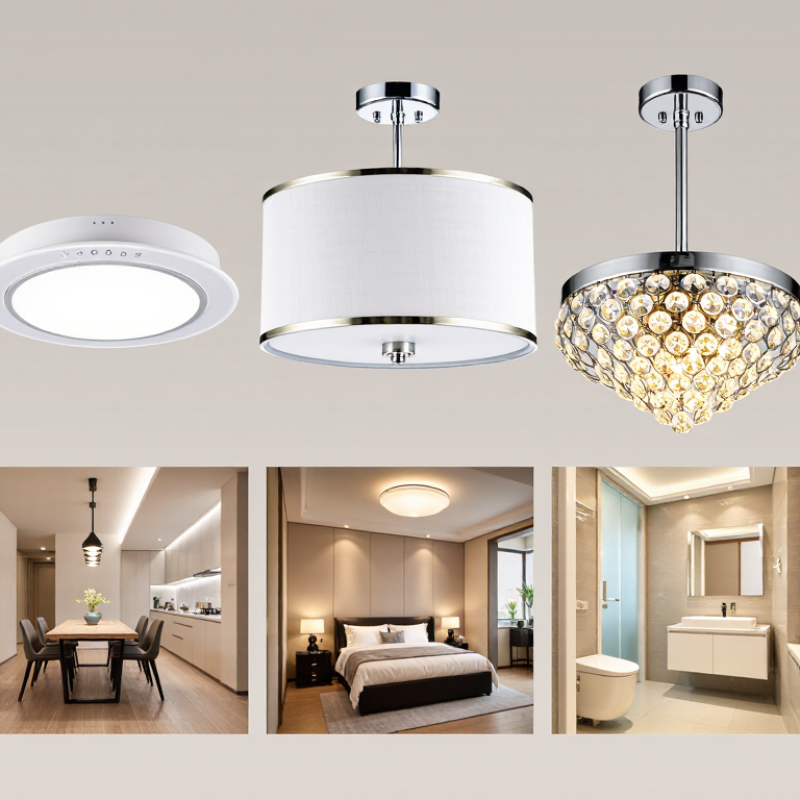
What Are the 2026 Top Types of Flush Mount Ceiling Lights?

2026 Flush Mount Overview: LED Efficacy Benchmarks Above 100 lm/W

What Are the 2026 Top Types of Flush Mount Ceiling Lights?

In 2026, flush mount ceiling lights will increasingly use efficient LED engines above 100 lumens per watt. The U.S. Department of Energy’s Solid-State Lighting research reports identify 200 lm/W-class LED packages as a continuing technical benchmark. However, finished luminaires usually deliver less because of lenses, drivers, heat, and housing design.

Flat LED disk lights remain practical for corridors, kitchens, and low ceilings. Their slim bodies spread light evenly across a frosted diffuser.

Drum-style flush mounts offer softer rooms and more decorative control. Recessed-look fixtures create cleaner ceilings without requiring deep cavities.

Tunable-white models may improve comfort by shifting from cooler morning light to warmer evening tones.

A 100 lm/W label is not the whole truth. I would check delivered lumens, not only LED-chip performance. The DesignLights Consortium’s technical requirements also separate fixture efficacy from component claims.

A well-designed 18-watt luminaire producing 1,900 lumens reaches about 106 lm/W at the fixture level. That matters more than a laboratory package figure.

Heat still changes the result. A compact fixture may test well, then lose output inside a warm ceiling cavity. This is where product testing can feel imperfect.

Look for photometric files, driver information, color consistency, and tested lifetime data. The U.S. Department of Energy’s LED Lighting Facts research also shows why measured performance deserves more trust than marketing language.

Integrated LED Flush Mounts: DOE Data on Lumens, Lifespan, and Efficiency

Integrated LED flush mounts remain a leading ceiling-light type for 2026. Their slim housings suit bedrooms, hallways, kitchens, and low ceilings.

DOE testing emphasizes delivered lumens, input watts, efficacy, and measured color quality. A reliable fixture should list initial lumens, not only wattage.

Many residential models produce roughly 80 to 120 lumens per watt. Actual results vary with diffuser design and thermal control.

A warm ceiling can reduce output over time. That detail is easy to miss.

Rated lifespans commonly range from 25,000 to 50,000 hours. This figure describes expected maintenance performance, not a personal guarantee.

DOE-related evaluations also distinguish useful light from simple diode survival. Check whether the rating reflects lumen maintenance, operating temperature, and driver performance.

I have seen attractive specifications hide weak thermal details. That deserves skepticism.

Tips:

Compare delivered lumens with room size and ceiling height.

Choose 2700K to 3000K for restful rooms, or 3500K to 4000K for work areas.

Review the photometric report when available.

A five-minute inspection can reveal more than a bright package photo.

Smart Flush Mounts: Matter Control, 2700–6500 K, and Dimming Standards

In 2026, smart flush mount ceiling lights are becoming more useful, not merely more connected. Matter control can link a fixture with compatible home ecosystems through a certified controller. Matter is a control standard, not a dimming method. Setup should include the intended network, firmware support, and a stable power connection. Thread may improve responsiveness, while Wi-Fi can simplify direct access. Neither option fixes poor installation. Keep that in mind.

Color temperature is now a practical choice, not a specification to ignore. A 2700 K setting gives bedrooms a warm, quiet appearance. Around 4000 K suits kitchens, corridors, and focused household tasks. At 6500 K, light looks much cooler and can feel harsh at night. A broad range is valuable, but only when transitions remain smooth. Some inexpensive drivers show visible stepping or weak color accuracy. Check CRI, measured output, and memory behavior before buying.

Dimming needs closer attention than the app interface suggests. Phase-cut dimming, 0–10 V, and DALI serve different wiring and control systems. A fixture may claim dimming yet flicker with an incompatible wall control. Verify the driver type, minimum load, neutral requirement, and listed dimmer compatibility. I would test the lowest setting before final mounting. It is a small step. It prevents a large repair. Independent safety certification and clear installation instructions also deserve attention. Matter commands need predictable fallback control when the network fails. That detail is easy to overlook.

What Are the 2026 Top Types of Flush Mount Ceiling Lights?

Smart flush mounts increasingly combine dimming, adjustable color temperature from warm 2700 K to cool 6500 K, and standardized Matter-based control. The chart compares the core capabilities of common fixture types rather than market-share data.

A value of 1 indicates that the capability is included in the fixture type. Matter-enabled tunable-white models combine brightness control and adjustable color temperature with standardized smart-home interoperability.

Ultra-Slim Flush Mounts: 90+ CRI, Low-Glare Diffusers, and Space Savings

In 2026, ultra-slim flush mount ceiling lights are shaping modern residential lighting. They suit bedrooms, hallways, kitchens, and apartments with limited ceiling height. A 90+ CRI rating reveals colors more accurately than basic low-CRI fixtures. In a kitchen, tomatoes look redder, wood appears warmer, and countertop tones feel less dull. Colors look more natural. That difference matters during cooking, cleaning, and daily work.

Low-glare diffusers make these fixtures more comfortable at eye level. Look for designs that spread light evenly across the entire panel. Micro-prismatic lenses can reduce harsh hotspots while maintaining useful brightness. Frosted acrylic creates a softer appearance, although it may lose a small amount of output. Some inexpensive fixtures advertise high CRI but provide weak color consistency. Check the technical sheet, not only the product photograph. Reflections on glossy cabinets can still appear.

During installation, measure the junction box and ceiling space carefully. A slim profile saves visual space, but it cannot correct poor placement. An eight-inch fixture may feel too small above a large dining table. Use multiple smaller units when one central light leaves dark corners. In bathrooms, choose a suitable damp-location rating and follow local electrical requirements. One limitation deserves attention: very thin housings may have less room for heat management. That compromise can affect long-term performance. I would also test the dimmer compatibility before final installation, because flicker remains possible with some controls.

Wet-Location Flush Mounts: IEC 60529 IP44–IP65 Protection Classes

In 2026, flush mount ceiling lights are moving toward cleaner forms and stronger moisture protection. For wet areas, the IP rating matters more than appearance. IEC 60529 defines two protection levels. The first digit measures resistance to solids. The second measures water protection.

IP44 resists objects larger than one millimeter and splashing water from all directions. It can suit covered porches, laundry rooms, and ventilated bathrooms.

IP54 adds better dust protection but keeps the same splash resistance.

IP65 is dust-tight and withstands low-pressure water jets.

Choose carefully. Not always.

A practical inspection should examine the lens seal, rear gasket, cable entry, and ceiling junction box. A tight glass or polymer diffuser cannot compensate for an exposed connection. IP65 also does not mean immersion protection. That misunderstanding can create serious installation problems.

Check the fixture’s wet-location listing and follow local electrical requirements. Ceiling material matters too. A porous exterior ceiling may hold moisture around the mounting plate, even when the light has an IP65 rating. Condensation is another concern in poorly ventilated bathrooms.

Leave adequate space around the housing when the instructions require it. IP44 may be sufficient under a sheltered ceiling, while IP65 offers more protection near direct spray. However, the highest rating is not automatically the best choice. Water exposure, airflow, maintenance access, and wiring quality should guide the decision.

FAQS

What should I compare when choosing an integrated LED flush mount?

Compare delivered lumens, input watts, efficacy, and measured color quality. Lumens show useful light. Wattage alone can mislead. Many residential fixtures provide about 80 to 120 lumens per watt. Actual performance depends on the diffuser and thermal control.

How long do integrated LED flush mounts usually last?

Common lifespan ratings range from 25,000 to 50,000 hours. This figure describes expected maintenance performance, not a personal guarantee. Check lumen maintenance, operating temperature, and driver performance. A bright package may hide weak heat management.

Can heat reduce LED brightness over time?

Yes. A warm ceiling fixture can gradually lose light output. Thermal control affects both brightness and useful life. Inspect ventilation space and housing materials. I would not trust impressive specifications without thermal details.

Which color temperature suits different rooms?

Choose 2700K to 3000K for bedrooms and restful spaces. Around 4000K works well in kitchens, corridors, and work areas. A 6500K setting looks much cooler and may feel harsh at night. Wide color ranges are useful only when transitions stay smooth.

What should I check before using smart lighting controls?

Confirm controller compatibility, firmware support, network requirements, and stable power. Wireless response can vary with the chosen connection method. A network failure should still allow predictable fallback control. Connected does not mean properly installed.

Why can a dimmable ceiling light flicker?

Different dimming systems use different wiring and control methods. Check the driver type, minimum load, neutral requirement, and compatible wall control. Test the lowest setting before final mounting. Five minutes can prevent a larger repair.

What does an IP44, IP54, or IP65 rating mean?

IP44 resists objects larger than one millimeter and splashing water. IP54 adds stronger dust protection with similar splash resistance. IP65 is dust-tight and withstands low-pressure water jets. IP65 does not mean immersion protection.

Where can moisture-rated flush mounts be used?

IP44 may suit covered porches, laundry rooms, and ventilated bathrooms. IP65 is more suitable near direct spray or heavy dust. Inspect the diffuser seal, rear gasket, cable entry, and junction box. The highest rating is not always necessary.

What installation details are easy to overlook?

Check the ceiling material, condensation risk, airflow, and maintenance access. Porous ceilings can hold moisture around the mounting plate. A sealed diffuser cannot protect an exposed electrical connection. I may be overcautious, but that inspection seems worthwhile.

Conclusion

In 2026, Flush Mount Ceiling Lights are becoming more efficient, versatile, and easier to integrate into modern interiors. LED models increasingly achieve efficacy above 100 lumens per watt, helping provide strong illumination while reducing energy use. Integrated LED flush mounts combine the light source and fixture into one streamlined unit, offering long service life, consistent lumen output, and simplified maintenance. Their compact design makes them suitable for bedrooms, hallways, kitchens, offices, and other areas where ceiling height is limited.

Smart flush mounts now support Matter-based control, adjustable color temperatures from warm 2700 K to cool 6500 K, and smooth dimming through compatible systems. Ultra-slim designs add 90+ CRI performance, low-glare diffusers, and valuable space savings for contemporary rooms. For bathrooms, covered patios, and utility areas, wet-location models with IP44 to IP65 protection ratings provide different levels of resistance to moisture and dust. Together, these developments make flush mount lighting more efficient, comfortable, adaptable, and practical for a wide range of applications.

Olivia

Olivia

Olivia is a dedicated marketing professional with extensive experience in developing clear, engaging, and results-oriented content for modern businesses. As a key contributor to the company’s marketing team, she combines strong industry knowledge with a deep understanding of customer needs, market......