
Handcrafted decorative lighting since 1980 · Worldwide project support

0%

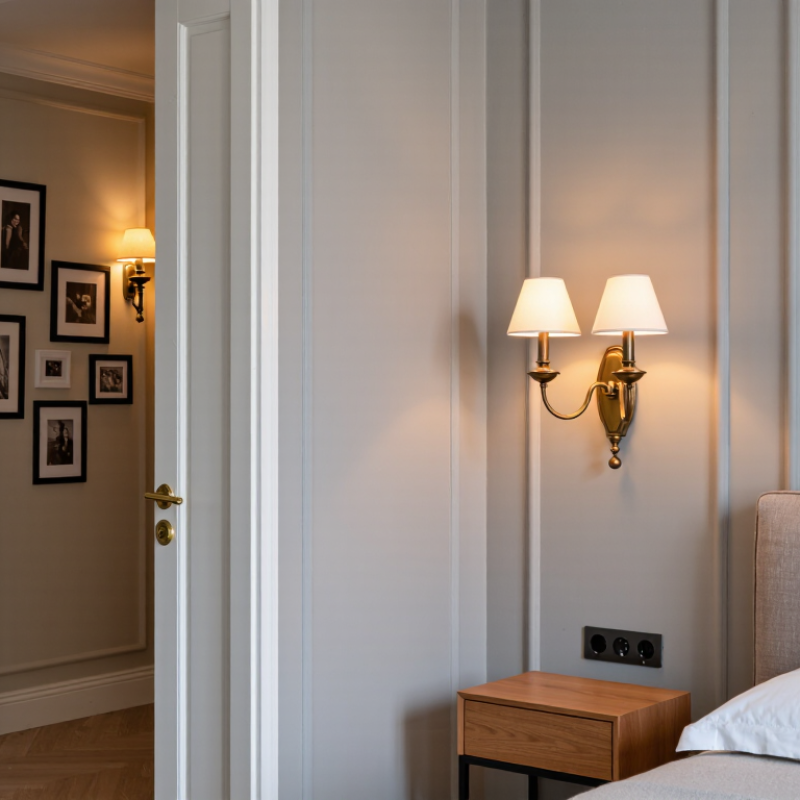
Decorative Wall Sconces can do more than fill an empty patch of wall. They shape how a room feels and functions. Beside a bed, a shaded sconce can free the nightstand from a bulky lamp. In a hallway, warm light can soften the view of framed photographs and painted trim. The right fixture feels considered. The wrong one can cast glare straight into someone’s eyes.

Lighting designer and author Randall Whitehead’s practical guidance points to a useful project principle: lighting should serve everyday tasks as well as the look of a space. That balance starts with details. Check the fixture’s scale against nearby doors, mirrors, and furniture. Consider where the light lands, not just how the sconce looks in a product photo. A dimmer can make a reading corner comfortable at night and less intense during quiet mornings.

Small choices matter. Finish, shade, bulb color, and mounting height all affect the result. For example, a brass fixture may echo cabinet hardware, while a fabric shade can soften light on a textured wall. Still, matching every finish is not always necessary. A little contrast can feel more personal, though it may take a mock-up to know for sure.

Decorative Wall Sconces suit bedrooms, living rooms, dining areas, and entryways when chosen for the room’s real needs. Start with the experience you want: a calm bedside glow, a brighter reading spot, or a welcoming pool of light near the door. Then compare design, output, and placement. It is easy to overfocus on appearance. Pause, measure, and picture the light at eye level before making a final choice.
Why Choose Decorative Wall Sconces for Your Project?

What Decorative Wall Sconces Are and How They Work

Decorative wall sconces are wall-mounted light fixtures that add both illumination and visual detail. Their shades, arms, and openings shape where light falls: upward-facing designs wash a ceiling, while downward-facing ones highlight a reading chair or textured wall. Many fixtures use replaceable LED lamps; others have built-in LED modules. A wall switch or compatible dimmer controls them through the home’s electrical circuit. Simple, but placement matters. A sconce installed too high can glare into your eyes.

The U.S. Department of Energy reports that LEDs use at least 75% less energy and last up to 25 times longer than incandescent lighting. That comparison concerns LED lighting broadly, not every individual sconce. When choosing a fixture, check its lumen output, lamp compatibility, and whether it produces the intended light direction. For a hallway, paired sconces can soften dark patches; beside a mirror, diffused light can reduce harsh shadows. I’ve found that attractive fixtures can still disappoint when their light is too cool or too dim for the task.

Tips: Mark the proposed height with painter’s tape and test the position at night. Check dimmer compatibility before installation, and have a qualified electrician handle wiring if you’re unsure. A small mock-up helps.

How Wall Sconces Influence Light and Room Ambience

Decorative wall sconces shape more than a room’s brightness. Their position and shade determine where light lands, how strong shadows appear, and whether faces feel softly lit or stark. Place a pair beside a mirror or artwork to create visual focus; mount them near a reading chair to bring light closer to the task. A translucent shade spreads a gentler glow, while an opaque shade directs a sharper beam. That difference is easy to overlook.

For a relaxed ambience, try warm-white lamps and dimmers, then check the effect after sunset. Pale walls reflect more light; deep paint can absorb it, making the same fitting feel dimmer. Keep glare in mind, especially beside beds and mirrors. The U.S. Department of Energy’s Energy Saver guidance reports that LEDs use at least 75% less energy and last up to 25 times longer than incandescent lighting. Those figures support choosing efficient lamps for frequently used sconces, but they do not guarantee a pleasant atmosphere. Light placement still matters. A practical test is to sit where the room is used and notice harsh reflections or dark corners. Adjusting one fixture may help; adding more is not always better.

Design and Practical Benefits of Choosing Wall Sconces

Why Choose Decorative Wall Sconces for Your Project?

Decorative wall sconces add light without taking up table or floor space. In a narrow hallway, a pair can brighten the route while leaving room for coats and furniture. Beside a bed, adjustable fixtures can provide reading light and keep nightstands clear. Their shape, finish, and shade also contribute to a room’s character. A warm metal finish may soften a plain wall; a simple linen shade can reduce glare.

Sconces work best when their placement suits both the room and the task. Mounting them near eye level often helps avoid harsh light, but exact height depends on the fixture and user. Spacing matters, too. A beautiful fixture can still feel awkward if it shines directly into someone’s eyes. Consider the wall color, nearby mirrors, and existing ceiling lights before choosing brightness. Dimmers offer flexibility, though not every bulb and dimmer combination works well. Check compatibility. For hardwired fixtures, have a qualified electrician assess the wiring and installation. Small details matter.

Tips: Mark proposed locations with removable tape and view them from seated and standing positions. Check the light after dark, not only in daylight. If the glow feels too bright, the plan may need adjusting. That is part of good design.

How to Select Sconces for Your Project’s Style and Needs

Why Choose Decorative Wall Sconces for Your Project?

Choose sconces by matching their light to the room’s purpose, not just its finish. A shaded fixture can soften a hallway, while an adjustable arm helps direct light beside a reading chair. For a bathroom, check the fixture’s damp-location rating and consider how shadows fall across the mirror. Scale matters, too: a wide sconce can crowd a narrow passage. The U.S. Department of Energy reports that LEDs use at least 75% less energy and last up to 25 times longer than incandescent lighting. LED compatibility is worth checking, especially when the project includes dimmers. A beautiful fixture that flickers is still a poor choice.

Tips: Tape a paper outline of the sconce to the wall before installation. Check its proportions from the doorway and seated eye level. Confirm bulb type, dimmer compatibility, and installation requirements.

For a cohesive look, compare metal finishes, shade shapes, and light color with nearby materials. Warm light can make wood and painted walls feel welcoming; cooler light may suit a crisp, modern scheme. Review the manufacturer’s photometric details when available, then test the fixture in the actual space. Renderings can mislead. I’ve found that a small shift in mounting height may change the whole effect, so leave room for adjustment during planning. DOE energy-use figures are helpful, but they don’t tell you whether the light distribution suits your project.

Why Choose Decorative Wall Sconces? Compare Lamp Energy Use

For a sconce project, compare light output and energy use alongside style, finish, and placement. This chart estimates annual electricity use for lamps producing roughly 800 lumens, assuming 3 hours of use per day.

Estimated annual use: incandescent 65.7 kWh, halogen 47.1 kWh, and LED 9.9 kWh. Calculated from representative wattages × 3 hours/day × 365 days ÷ 1,000. Actual wattage and light output vary by lamp; check product specifications when selecting sconces.

Placement and Installation Factors to Consider

Decorative wall sconces work best when their position supports the room’s task, not just its symmetry. Beside a bathroom mirror, a pair often provides more even facial light than a single fixture above it. A practical starting point is to place the light centers near eye level, roughly 60–66 inches above the floor, then adjust for mirror size and household needs. Measure from the finished floor. Check sightlines from the doorway, too; a bare bulb can create uncomfortable glare.

Before ordering, mark each fixture’s outline and electrical box location with painter’s tape. Confirm that the backplate covers the box and that doors, cabinets, and artwork won’t collide with the fixture. Dimmers require compatible lamps and controls, so verify both before installation.

The U.S. Department of Energy’s Energy Saver guidance reports that LEDs use at least 75% less energy than incandescent lighting and can last up to 25 times longer. That efficiency still depends on choosing a suitable, dimmable lamp. IES lighting guidance also stresses matching light to the visual task, but a standard height is only a starting point—not a rule for every room.

Have a qualified electrician check wiring, mounting support, and applicable local requirements. Measure twice. A small mismatch can show.

FAQS

How should I choose a wall sconce?

Match the light to the room’s purpose, not just its finish. A shaded fixture can soften a hallway, while an adjustable arm can light a reading chair.

What height works for sconces beside a bathroom mirror?

A useful starting point is 60–66 inches from the finished floor to the light centers. Adjust for mirror size and household needs.

How can I check whether a sconce will fit?

Tape a paper outline to the wall before ordering. Check it from the doorway and from a seated position. Measure twice.

What should I consider when placing bathroom sconces?

A pair beside the mirror often gives more even facial light than one fixture above it. Check the damp-location rating and watch for glare.

How do I avoid problems with dimmers?

Confirm that both the lamp and dimmer are compatible. A fixture may look right but still flicker with an unsuitable setup.

Are LED lamps a good option for sconces?

LEDs use at least 75% less energy and can last up to 25 times longer than incandescent lamps. Their light still needs to suit the task.

How can I make a sconce fit the room’s style?

Compare its metal finish, shade shape, and light color with nearby wood and paint. Warm light may feel welcoming; cooler light can suit a crisp scheme.

What should I check before installation?

Mark the electrical box and fixture outline with painter’s tape. Make sure the backplate covers the box and doors or cabinets won’t hit it.

Should I rely on plans or renderings to judge the final effect?

Not entirely. Renderings can mislead, and a small height change may alter the look. I’d leave room to adjust after checking the actual space.

Who should check the wiring and mounting?

Have a qualified electrician review the wiring and mounting support. A neat-looking plan can still miss a practical detail.

Conclusion

Decorative Wall Sconces are wall-mounted light fixtures that add focused or ambient illumination while contributing to a room’s overall design. Depending on their shape, shade, and light direction, they can create a soft, welcoming glow, highlight architectural details, or provide useful light for everyday activities. Because they occupy little floor or table space, sconces can be a practical way to balance a room’s lighting and enhance its atmosphere.

Choosing the right sconces means considering your project’s style, lighting needs, room size, and existing fixtures. Think about whether you need gentle background light, a brighter reading area, or an accent that draws attention to a feature. Placement also matters: account for wall height, spacing, nearby furniture, wiring access, and safe, suitable installation. With thoughtful selection and positioning, wall sconces can bring together function, comfort, and visual character.

Olivia

Olivia

Olivia is a dedicated marketing professional with extensive experience in developing clear, engaging, and results-oriented content for modern businesses. As a key contributor to the company’s marketing team, she combines strong industry knowledge with a deep understanding of customer needs, market......