Choosing Outdoor Pendants for global projects requires more than matching a beautiful fixture to an attractive façade. Designers must consider climate, mounting conditions, light distribution, maintenance access, and regional electrical requirements. A pendant that performs well beside a dry Mediterranean courtyard may fail in a coastal city with salt air, driving rain, and constant humidity.
Lighting designer Randall Whitehead has said, “Good lighting is not about how much light you have, but how you use it.” This principle remains practical when selecting Outdoor Pendants. The fixture should illuminate entrances, terraces, walkways, or dining areas without creating harsh glare. Look for suitable ingress protection, corrosion-resistant finishes, reliable LED performance, and replaceable components where local servicing is limited. Warm color temperatures can make hospitality spaces feel welcoming, while controlled optics help preserve visual comfort.
Details matter.
On international projects, I would compare photometric data, installation drawings, and certification requirements before approving a product. Supply chains also deserve attention. A visually perfect pendant becomes a poor specification if spare parts take months to arrive. This is where project teams sometimes underestimate risk. I have seen attractive finishes age differently across climates, especially when cleaning routines are unclear. Therefore, the best choice balances appearance, performance, compliance, and long-term care.
This guide explores how to evaluate Outdoor Pendants for different regions, building types, and environmental pressures. It also questions a common assumption: higher brightness does not always create better outdoor lighting. Thoughtful selection creates safer circulation, stronger architectural character, and fewer costly replacements.
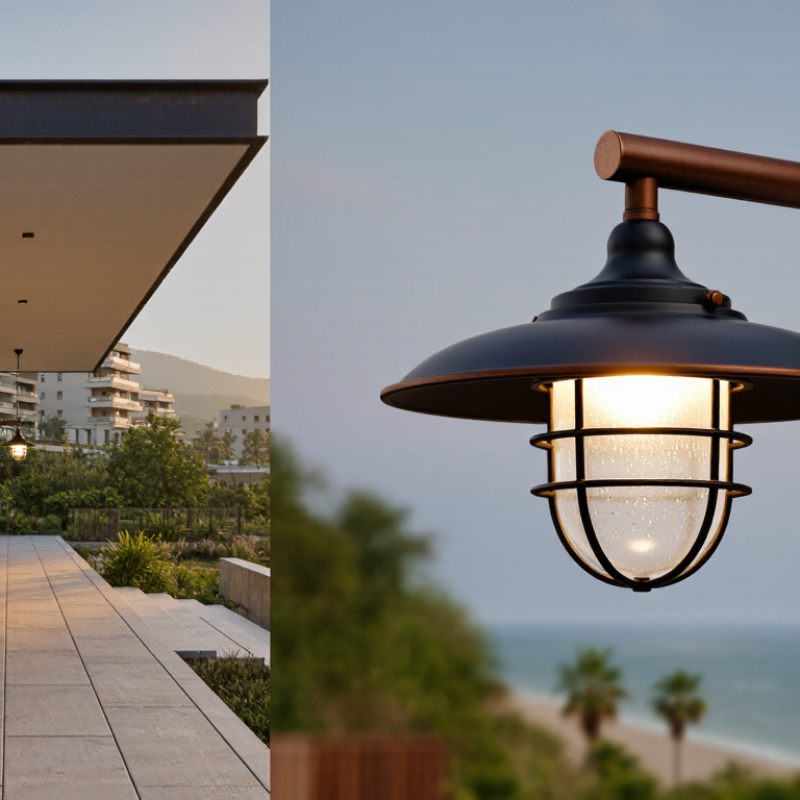
Define the Purpose and Setting of the Outdoor Pendant
Define the Purpose and Setting of the Outdoor Pendant
Outdoor pendants should begin with purpose, not appearance. Is the fixture guiding guests, lighting a dining terrace, or marking an entrance? Each setting demands a different beam, mounting height, and brightness. An entrance needs clear facial recognition. A covered patio needs comfortable light without glare.
The International Energy Agency reports that lighting uses about 15% of global electricity. Efficient sources matter, but efficiency alone does not create good lighting. For global projects, select suitable ingress protection, corrosion resistance, and voltage compatibility. The CIE publication “Guide on the Limitation of the Effects of Obtrusive Light” also stresses controlling spill light near homes, roads, and environmentally sensitive areas. Keep the light where people need it.
Site experience often reveals problems that drawings miss. Wind can swing a long pendant. Salt air can age exposed metal quickly. A low ceiling may make a decorative fitting feel visually heavy. I once considered a bright pendant suitable for a hotel walkway, but its exposed lamp caused uncomfortable glare at eye level. The safer choice was softer diffusion and a lower output. Not perfect, but more usable.
Color temperature also requires cultural and environmental judgment. Warm light can support hospitality, while cooler light may improve task visibility. Test samples at night, after rain, and from pedestrian height. Review the result honestly. A beautiful pendant can still fail its setting.
Assess Weather Resistance and Environmental Protection Ratings
Outdoor pendants face rain, dust, salt, insects, and rapid temperature changes. The World Meteorological Organization’s State of the Global Climate 2023 report recorded 2023 as the warmest year on record. Designers should expect harsher heat and heavier rainfall in many regions. Climate exposure is no longer an edge case.
Start with the enclosure rating. IEC 60529 defines IP65 as dust-tight protection against water jets. IP66 adds protection against powerful water jets, while IP67 addresses temporary immersion. These ratings are not interchangeable. An IP67 pendant may still need a separate jet-resistance rating. Check the complete code. Do not judge from the first two characters alone.
Inspect the installation site, not only the product sheet. A pendant under a roof may collect wind-driven rain from the side. A coastal project needs corrosion-resistant hardware and sealed cable entries. ISO 9223 helps classify atmospheric corrosivity, including salt-heavy environments. Look for UV-stable lenses, drainage paths, and gaskets that remain flexible during freeze-thaw cycles. Impact protection may also matter in public areas; IEC 62262 provides the IK classification framework.
From field reviews, failures often begin at small details: a loose gland, trapped water, or an exposed screw. Higher ratings do not guarantee better performance. That assumption needs challenging. Confirm test conditions, mounting orientation, cleaning access, and local electrical requirements with the project engineer. Cite: WMO State of the Global Climate 2023; IEC 60529; ISO 9223; IEC 62262.
Select Suitable Materials, Finishes, and Lighting Performance
How to Choose Outdoor Pendants for Global Projects?
Outdoor pendants must survive their location, not just look attractive in product images. For coastal sites, marine-grade stainless steel or treated aluminum can reduce corrosion risks. In dry, dusty regions, sealed housings help protect internal components. Wet locations need an appropriate IP rating, while exposed public areas may require stronger impact protection. Material choices should also reflect local maintenance access.
Finishes affect both appearance and service life. Powder coating can provide consistent color, but dark finishes may reveal dust and salt faster. A textured surface often hides minor marks better than a smooth gloss finish. Before approval, request finish samples and inspect them under daylight. Small color differences become obvious across a large façade. I have seen attractive samples age poorly because cleaning methods were never discussed.
Lighting performance needs equal attention. Select a color temperature suited to the building and surrounding environment. Warm light can feel welcoming, while cooler light may improve visual clarity. Check lumen output after considering diffuser loss, driver efficiency, and expected aging. Use suitable glare control near entrances and pedestrian paths. Confirm voltage, frequency, dimming compatibility, and local electrical requirements. A high IP rating does not guarantee good light quality. Test a sample outdoors at night, because drawings cannot show every reflection, shadow, or uncomfortable glare.
Match the Pendant Design to Global Safety Standards
How to Choose Outdoor Pendants for Global Projects?
Match the Pendant Design to Global Safety Standards
Outdoor pendant selection should begin with local safety requirements, not appearance. Standards differ across regions, even for similar climates. Check the required voltage, frequency, certification marks, and installation rules before approving a design. A pendant made for one market may need different components elsewhere.
Weather protection is equally important. Look for an appropriate IP rating against rain, dust, and water jets. Coastal projects need corrosion-resistant finishes and sealed connections. In areas with public access, an IK rating can help assess impact resistance. Confirm that the canopy, cable entry, junction box, and mounting hardware share the same protection level. One weak part can undermine the entire fixture.
Do not rely only on a supplier’s product sheet. Request test reports, material details, wiring diagrams, and maintenance instructions. Have a qualified local professional verify grounding and load capacity. A heavy pendant may look secure while stressing an unsuitable ceiling structure. Small details matter. We often focus too much on the visible shade and overlook hidden terminals or drainage paths. That is a mistake worth revisiting. Site conditions can also change after approval, so inspection records and installation photos should remain part of the project file.
Plan Installation, Maintenance, and Long-Term Project Costs
Choosing outdoor pendants for global projects starts with the installation plan, not the fixture’s appearance. Site surveys should record ceiling structure, wind exposure, salt air, rainfall, and electrical capacity. A pendant suited to a sheltered hotel entrance may fail above an open coastal walkway. I have seen projects underestimate mounting hardware and lift access. The delay was avoidable. Specify corrosion-resistant fasteners, sealed cable entries, and suspension systems rated for local load conditions. Confirm voltage, frequency, grounding, and emergency requirements with qualified local professionals.
Long-term cost depends on more than purchase price. Estimate installation labor, transport, commissioning, cleaning, driver replacement, and access equipment before approval. For high ceilings, a cheaper pendant can become expensive when every inspection requires a mobile lift. Select accessible components and document replacement procedures clearly. Use a maintenance schedule based on dust, humidity, temperature, and operating hours. In one humid site, monthly cleaning was excessive, while quarterly checks proved more realistic. That assumption should be tested, not copied.
Keep spare lenses, seals, fasteners, and compatible electrical parts near the project when practical. Record installation photographs and technical details for future teams. Check light output after cleaning, because dirt can create uneven pools on paving and stairs. Do not ignore glare. A compliant design can still frustrate pedestrians or burden maintenance staff. Review the first season’s failures honestly, then adjust specifications for the next site.
How to Choose Outdoor Pendants for Global Projects? – Plan Installation, Maintenance, and Long-Term Project Costs
| Project and Environmental Fit |
Technical Selection Criteria |
Installation, Maintenance, and Cost Planning |
| Recommended Use |
Typical Exposure |
Recommended Protection |
Ingress Protection |
Impact Protection |
Color Temperature |
LED Input Power |
Expected LED Life |
Typical Installation Time* |
Cleaning / Inspection Interval |
Estimated Annual Energy Cost** |
Estimated 10-Year Operating Cost*** |
| Covered entrance or hotel canopy |
Protected from direct rain; occasional wind-blown moisture |
IP44 or higher |
IP44 |
IK05 |
2700–3000 K |
12 W |
50,000 hours |
0.75–1.25 hours per fitting |
Every 12 months |
US$7.88 |
US$270–420 |
| Residential terrace or sheltered balcony |
Moderate rain and humidity; limited physical contact |
IP54 or higher |
IP54 |
IK06 |
2700–3000 K |
15 W |
50,000 hours |
1.0–1.5 hours per fitting |
Every 12 months |
US$9.86 |
US$300–480 |
| Restaurant patio or public dining area |
Direct rain, food residue, frequent cleaning, and regular public use |
IP65 or higher |
IP65 |
IK07 |
2700–3000 K |
18 W |
50,000–60,000 hours |
1.25–2.0 hours per fitting |
Every 6 months |
US$11.83 |
US$410–650 |
| Coastal promenade or marina walkway |
Salt spray, high humidity, wind, and frequent weather exposure |
IP66 + corrosion-resistant finish |
IP66 |
IK08 |
3000–3500 K |
20 W |
50,000–60,000 hours |
1.5–2.5 hours per fitting |
Every 3–6 months |
US$13.14 |
US$560–900 |
| Transit hub, school, or civic facility |
Heavy public traffic, accidental impact, dust, and direct weather |
IP65 + IK08 or higher |
IP65 |
IK08 |
3000–4000 K |
25 W |
60,000 hours |
1.5–2.5 hours per fitting |
Every 6 months |
US$16.43 |
US$520–820 |
| Industrial loading bay or logistics yard |
Dust, vibration, rain, vehicle activity, and frequent operational use |
IP66 + IK08 or higher |
IP66 |
IK08 |
3500–4000 K |
30 W |
60,000 hours |
2.0–3.0 hours per fitting |
Every 6 months |
US$19.71 |
US$620–980 |
| High-rise exterior or exposed rooftop terrace |
Direct rain, strong wind, temperature variation, and difficult access |
IP66 + IK08 + wind-rated suspension |
IP66 |
IK08 |
3000–3500 K |
24 W |
60,000 hours |
2.0–4.0 hours per fitting |
Every 3–6 months |
US$15.77 |
US$850–1,400 |
*Installation time is a planning range for one pendant where the electrical point and mounting structure are already available. It excludes scaffolding, lift equipment, new cabling, structural reinforcement, and local permitting.
**Annual energy cost assumes 4,380 operating hours per year, equivalent to 12 hours per day, and an electricity rate of US$0.15 per kWh. Formula: wattage ÷ 1,000 × 4,380 × US$0.15.
***Estimated 10-year operating cost includes electricity, routine cleaning, inspection, access equipment, and an allowance for driver or component replacement. It excludes the initial purchase price, taxes, shipping, and currency fluctuations. Actual figures should be recalculated using local labor rates, electricity tariffs, climate conditions, and access requirements.
|
FAQS
Match the rating to actual exposure, not appearance. IP65 resists dust and water jets. IP66 handles stronger jets. IP67 covers temporary immersion. These ratings are not interchangeable. Check the complete code. A pendant beneath a roof may still receive sideways rain.
Use corrosion-resistant hardware, sealed cable entries, and suitable finishes. Salt air can attack exposed screws quickly. Classify local atmospheric corrosivity before approval. Inspect drainage paths and flexible gaskets. Small details matter. A loose cable gland can trap water.
No. A high rating does not guarantee durable materials or good installation. Confirm test conditions, mounting direction, cleaning access, and local electrical requirements. Review the actual site. Product sheets cannot show every failure risk.
Choose materials for climate, dust, salt, impact, and maintenance access. Treated aluminum or marine-suitable steel may help near the coast. Sealed housings suit dusty regions. Request finish samples. View them in daylight. Dark surfaces reveal dust and salt faster. I have seen attractive finishes age badly.
Select color temperature for the building and surrounding setting. Check useful lumen output after diffuser loss, driver efficiency, and aging. Add glare control near entrances and paths. Confirm voltage, frequency, dimming, and grounding needs. Test a sample outdoors at night. Drawings miss reflections.
Survey ceiling structure, wind exposure, rainfall, salt air, and electrical capacity. Specify fasteners and suspension systems for local loads. Seal cable entries carefully. Confirm emergency requirements with qualified local professionals. Mounting hardware is easy to underestimate. That mistake becomes expensive.
Include transport, labor, commissioning, cleaning, access equipment, and component replacement. A cheap fixture may require costly lift access at high ceilings. Keep spare seals, lenses, fasteners, and compatible electrical parts nearby. Document replacement steps with photographs. Purchase price is only one part.
Base the schedule on dust, humidity, temperature, and operating hours. A humid site might need frequent checks, but monthly cleaning may be excessive. Quarterly inspections may work better. Test the assumption locally. Check light output after cleaning. Dirt can create uneven pools on stairs and paving.
Conclusion
Choosing Outdoor Pendants for global projects begins with understanding the purpose and setting of the installation. Consider whether the fixture will illuminate entrances, terraces, walkways, hospitality areas, or public spaces, and evaluate exposure to rain, humidity, dust, wind, salt air, and temperature changes. Weather resistance and suitable environmental protection ratings are essential for reliable performance. Materials and finishes should be selected for durability, corrosion resistance, and visual compatibility with the surrounding architecture. Lighting performance, including brightness, beam distribution, color temperature, and energy efficiency, should also support the project’s functional and aesthetic goals.
For international applications, the pendant design must align with relevant electrical safety requirements, installation practices, and local project standards. Before purchase, confirm voltage compatibility, mounting methods, wiring arrangements, and certification needs. A complete plan should also address installation access, cleaning, replacement of components, inspection routines, and expected service life. Evaluating these factors together helps project teams control long-term costs, reduce maintenance challenges, and create safe, attractive, and dependable outdoor lighting solutions across different climates and regions.