
Handcrafted decorative lighting since 1980 · Worldwide project support
Choosing Outdoor Wall Sconces can seem straightforward until you compare brightness, weather resistance, style, and installation needs. The best choice should suit both the exterior and the way you use the space. A light beside a front door has a different job from one illuminating a long patio wall. Consider the area’s size, the fixture’s mounting height, and whether you want focused light or a softer glow. Small details matter.
Check the product’s suitability for its intended location, especially if it will face rain, salt air, or frequent moisture. Look for clear information about its weather rating, materials, bulb type, and maintenance requirements. Warm light can make a porch feel welcoming, while a shielded design may reduce glare near seating or windows. Looks matter, too. A fashionable finish may not hold up well in a harsh climate, and a bright fixture can feel uncomfortable when poorly positioned. I have found that judging a light from a product photo alone is unreliable; proportions and finish can look different against real siding. Before buying, compare dimensions with the wall space and review how the fixture opens for cleaning or bulb replacement. For wiring or uncertain mounting conditions, consult a qualified professional. The right option is rarely the most decorative or the brightest. It is the one that balances dependable performance, comfortable light, and a design you will still like after the first season.
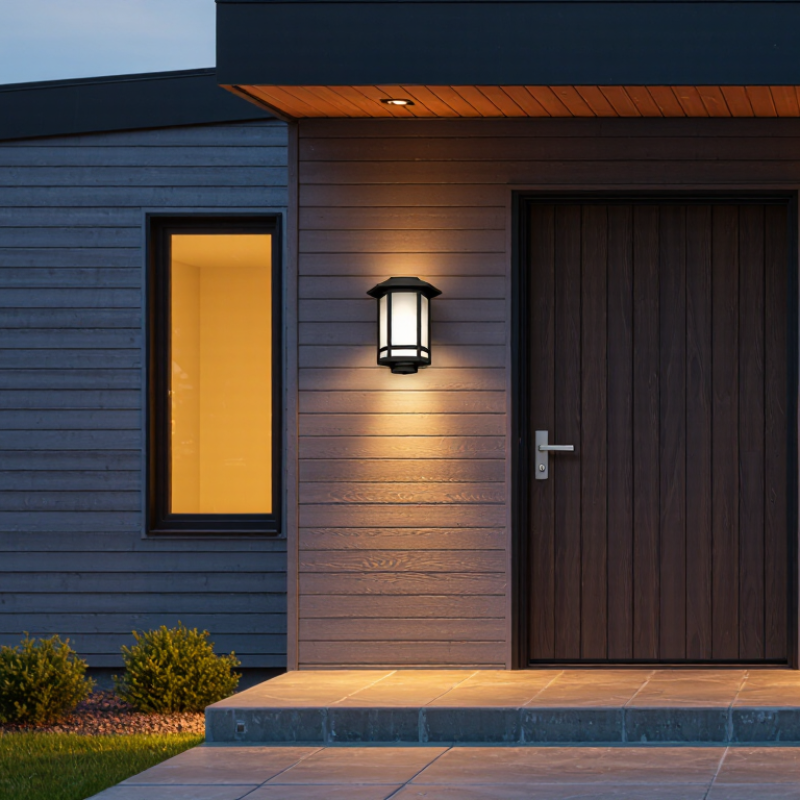
Before choosing a fixture, note where light is actually needed: the front door, steps, garage entry, or a dark path beside the house. Walk the route after dusk. Look for deep shadows, glare in eye level, and places where wet paving might be slippery. Small details matter. A sconce should help people see faces and door hardware, not shine straight into a neighbor’s window.
Placement changes the result. Near an entry, mount the fixture around eye level—often 5.5 to 6 feet above the ground—and adjust for the door’s height and nearby sightlines. For a pair of sconces, check that both illuminate the approach evenly. The Illuminating Engineering Society’s Recommended Practice for Outdoor Environmental Lighting (RP-33-14) addresses visibility, glare, and light trespass; use its principles when planning the beam direction. A common misstep is choosing a bright lamp before checking where its light lands.
Think beyond your own wall, too. A 2017 Science Advances study by Kyba and colleagues found that the area of Earth’s artificially lit outdoor surfaces grew by about 2.2% annually from 2012 to 2016, based on satellite observations. That figure is a useful reminder to aim light carefully. Shielded fixtures and modest output can illuminate a doorstep without washing the whole facade. I still find placement easy to underestimate until I test it after dark.
Outdoor wall sconces face rain, sun, temperature swings, and airborne grit. Choose materials suited to your local conditions. Powder-coated aluminum is lightweight and resists rust, but chips can expose bare metal. Stainless steel offers strong corrosion resistance; 316 grade is often a better choice near the coast than 304. It is not corrosion-proof. Solid brass can weather into a natural patina, which may look uneven over time.
Finishes matter as much as the fixture body. Look for a durable exterior coating with smooth coverage around seams, screw holes, and mounting plates. Check the edges. A small coating gap can become a starting point for corrosion. Dark finishes may absorb more heat in direct sun, while glossy surfaces can show dust and water spots. Match the finish to nearby hardware, but prioritize the maker’s outdoor-use and maintenance guidance over appearance alone.
Tips: Near salt air, rinse fixtures periodically with fresh water and inspect for scratches. Keep water from pooling around the mounting plate. Confirm the fixture is rated for its exposure, and use compatible fasteners to reduce corrosion between different metals. A little upkeep is easy to forget, so choose a finish you are willing to maintain.
| Material | Weather Resistance | Suitable Locations | Recommended Finish | Care and Selection Notes |
|---|---|---|---|---|
| 316 stainless steel | Very good resistance to corrosion, including in salt-air environments, due to its molybdenum content. | Coastal areas, exposed walls, and other locations where corrosion is a concern. | Brushed or polished stainless steel; a compatible protective coating can add extra surface protection. | Rinse away salt and dirt periodically. Check that fasteners and other exposed components are also suitable for the location. |
| 304 stainless steel | Good general corrosion resistance, but less resistant to chloride exposure than 316 stainless steel. | Most inland outdoor settings, particularly sheltered or moderately exposed walls. | Brushed, polished, or coated finish. | For coastal or salt-exposed locations, 316 stainless steel is generally the more suitable choice. |
| Aluminum | Forms a naturally protective oxide layer, but can be vulnerable to surface damage and corrosion in harsh environments. | Many residential outdoor settings, including covered porches and general exterior walls. | Exterior-grade powder coating or anodizing. | Choose a durable, evenly applied finish and repair chips or deep scratches to help protect the underlying metal. |
| Brass | Generally durable outdoors; uncoated brass can darken and develop a natural patina over time. | Entryways, covered patios, and decorative exterior installations. | Unlacquered brass for a changing patina, or lacquered brass to retain a brighter appearance. | Unlacquered brass requires acceptance of color changes. Lacquer may need maintenance if it wears or peels. |
| Copper | Durable outdoors and naturally develops a brown or green patina as it reacts with the environment. | Decorative installations where a naturally changing surface is acceptable. | Uncoated copper for natural patina; a suitable clear coating for a longer-lasting bright appearance. | Color change is normal on uncoated copper. Clear coatings can wear over time and may require renewal. |
| Cast iron or steel | Can rust if exposed metal is not adequately protected or if its protective coating is damaged. | Sheltered locations or installations where regular coating inspection and upkeep are practical. | Exterior-grade primer and paint, or a durable powder-coated finish. | Inspect the finish periodically, especially at edges and fasteners, and promptly repair exposed areas to limit rust. |
Selection note: Material and finish are only part of weather suitability. Check the fixture’s stated outdoor rating and installation instructions for its intended exposure, such as damp or wet locations. In coastal areas, prioritize corrosion-resistant materials and compatible hardware.
How to Choose the Best Outdoor Wall Sconces?
Compare Light Output, Color Temperature, and Bulb Types
Outdoor wall sconces should illuminate an entry without overwhelming it. Compare lumen output rather than wattage: watts measure energy use, not visible brightness. On a small porch, moderate output can make house numbers and a keyhole easy to see. Larger walls or darker paths may need more light, but several modest fixtures can feel calmer than one glaring source. Check the beam direction, too. Downward light can reduce glare at eye level.
Color temperature changes both mood and visibility. Around 2700K to 3000K usually gives a warm tone that suits brick, wood, and painted siding. Cooler light can make steps and edges seem clearer, but may look stark beside warm indoor lighting. If possible, compare the light outdoors after dusk. A specification sheet can’t show exactly how your wall color will shift. Small detail, big difference.
Bulb type affects upkeep and control. Integrated LEDs are efficient and can last for years, but replacing the light source may mean replacing the fixture. Replaceable LED bulbs make it easier to change brightness or color, provided the fixture supports them and is rated for outdoor use. Check the damp- or wet-location rating for the fixture’s exposure, and confirm dimmer compatibility. It’s easy to overestimate brightness; the entry can look washed out, not safer. A little restraint helps.
An outdoor wall sconce should feel like part of the house, not an accessory pasted onto it. Read the architecture before comparing finishes. A Craftsman entry often suits a compact lantern with clear panes and restrained metalwork. A brick colonial facade may look balanced with traditional arms and symmetrical placement. On a clean-lined modern home, choose a simple cylinder or squared form with little ornament. Keep it quiet.
Scale matters as much as style. Measure the door, trim, and wall area, then compare the fixture’s height against them. A tiny sconce beside a broad garage door can disappear; an oversized one may crowd narrow casing. Match the finish to existing details, such as dark window frames, aged bronze hardware, or painted shutters, but do not force every metal to match. A little contrast can look intentional. Check.
Consider how the fixture looks in daylight, when its shape and finish are fully visible. For a covered porch, a softer traditional lantern may complement wood posts; exposed concrete often pairs better with crisp geometry. If the house mixes styles, repeat one feature—perhaps a curved arm or warm metal—rather than copying every detail. Plans can go wrong here: a pretty catalog image may not suit your actual trim. Hold a paper outline against the wall and step back from the path. It is a small test, but it can change your choice.
Before choosing an outdoor wall sconce, check how it will attach to your wall and connect to existing wiring. Measure the junction box, mounting surface, and available clearance near doors or trim. A heavy fixture may need a secure mounting point, not just decorative siding. Small details matter.
Match the fixture’s safety rating to its actual location. A covered porch may need a damp-location rating, while a wall exposed to direct rain needs a wet-location rating. An IP code can offer useful protection information, but do not assume one number guarantees suitability for every climate or installation. Read the product’s instructions and rating labels carefully. Water can enter from the side, too.
Confirm the required voltage and installation method before buying. If the wiring is damaged, the box is loose, or you are unsure how the circuit is protected, pause and consult a qualified electrician. Switch off power at the breaker before any permitted inspection, and verify that it is off with an appropriate tester. It is easy to focus on appearance and overlook access for future maintenance; I would check that before the fixture is mounted. Follow local electrical requirements and the manufacturer’s clearance instructions.
Focus on the front door, steps, garage entry, or a dark path beside the house. Walk the route after dusk. Look for shadows and slippery paving.
Around 5.5 to 6 feet above ground often works. Adjust for the door and nearby sightlines. Test it after dusk.
Check that both fixtures illuminate the approach, door hardware, and house numbers. Aim beams away from neighbors’ windows. Small angle changes matter.
Powder-coated aluminum is lightweight, while stainless steel resists corrosion. Near the coast, 316-grade steel may suit salt air better than 304. Not corrosion-proof.
Inspect seams, screw holes, and mounting plates for coating gaps or scratches. Rinse salt residue with fresh water. I might forget this upkeep, so choose a finish you can maintain.
Compare lumens, not watts. Moderate output may reveal a keyhole and house numbers without washing out the wall. Too bright can feel glaring.
Warm light around 2700K to 3000K often complements brick, wood, and painted siding. Compare it outside after dusk. Walls can look different than expected.
Integrated LEDs can last for years, but replacing the light source may mean replacing the fixture. A replaceable LED bulb offers more flexibility. Check outdoor rating and dimmer compatibility.
Choosing the best Outdoor Wall Sconces starts with understanding how you use your outdoor spaces and where you need illumination. Consider entrances, patios, and walkways, then select placements that provide useful light without creating harsh glare. Since these fixtures are exposed to the elements, look for weather-resistant materials and finishes suited to your local conditions.
Compare light output, color temperature, and bulb types to find a comfortable balance between visibility and atmosphere. The sconce’s shape and style should also complement your home’s architecture. Before making a choice, check the installation requirements and confirm that the fixture has appropriate outdoor safety ratings. Considering these factors together can help you select sconces that are practical, durable, and visually harmonious with your home.