Choosing Multi-Pendant Lights in 2026 requires more than matching finishes to a dining table. It demands careful attention to scale, glare, energy use, and human comfort. The International Energy Agency and the 4E Solid State Lighting Annex continue to identify LED efficiency as a major force reshaping lighting design. However, efficiency alone does not guarantee a successful interior. A bright fixture can still create harsh reflections on glass, polished stone, or a laptop screen.
Dr. Mariana Figueiro, a respected lighting researcher, has stated, “Light is the most powerful cue for the circadian system.” Her point matters in kitchens, restaurants, hotels, and home offices. Color temperature, dimming control, and evening brightness can influence how a space feels and functions. The U.S. Department of Energy’s solid-state lighting research also highlights improved controls, color quality, and connected systems as important development areas. Yet reports cannot decide whether three pendants will feel elegant or crowded above one table.
That decision needs measurements. Record the ceiling height, table width, pendant diameter, and suspension length. Leave enough visual space between each shade. Check the beam angle before installation. Look for high color rendering, low glare, and compatible dimmers. A 2700K setting may create warmth at night, while 3000K can support clearer task lighting. These are useful starting points, not universal rules. Even experienced designers sometimes overestimate fixture size from showroom photographs. This guide examines the practical choices, weak assumptions, and small installation details that can make Multi-Pendant Lights feel balanced rather than excessive.
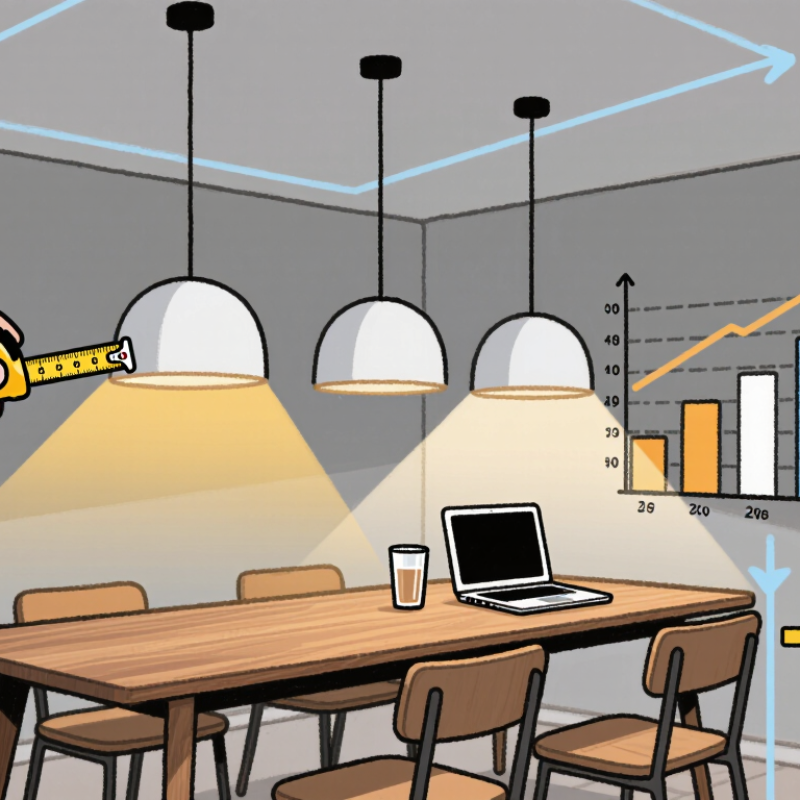
Define Multi-Pendant Light Types by Fixture Count, Shape, and Mounting System
How to Choose Multi-Pendant Lights in 2026?
Define multi-pendant lights by fixture count, shape, and mounting system before comparing finishes. A two- or three-light cluster suits compact dining tables and narrow kitchen islands. Larger linear arrangements, often containing four to eight pendants, distribute light across wider surfaces. Fixture count should follow table length, not visual excitement. That is an easy mistake to make.
Shape controls both beam spread and room character. Globe shades create softer, broader light, while cones direct illumination downward for task areas. Cylindrical shades feel precise above counters. Sculptural forms attract attention but may produce shadows. Test the light at seated eye level when possible. Real rooms expose flaws quickly.
Mounting systems decide adjustability. A shared canopy keeps installation visually clean. Individual cords allow staggered heights, useful above stairwells or long islands. Adjustable stems offer a more rigid, architectural appearance. Cable systems can solve uneven ceiling heights, though they may look unfinished without careful alignment. The U.S. Department of Energy’s Solid-State Lighting research reports that advanced LED systems can exceed 200 lumens per watt, making optical control more important than simply adding fixtures. The International Energy Agency has also reported that lighting historically represented roughly 15% of global electricity use. Efficient sources help, but poor spacing still wastes useful light. I would prototype the layout with paper shades first. It is less elegant, but more honest.
Set Room Illumination Goals Using the IES 300–500 Lux Task-Light Range
How to Choose Multi-Pendant Lights in 2026?
Start with the task, not the fixture. The Illuminating Engineering Society (IES) commonly places reading, writing, and focused work within a 300–500 lux task-light range. This target should guide your multi-pendant layout. A 12-square-meter dining table needing 400 lux requires about 4,800 useful lumens. With a 70% utilization factor, the pendants may need roughly 6,860 emitted lumens. Real rooms are less predictable. Dark finishes, high ceilings, and dusty shades can reduce delivered light.
Measure at table height, not beside the ceiling canopy. CIE 150 and ISO 8995-1 emphasize maintaining suitable illuminance across the working surface, rather than relying on brightness at one point. Choose several smaller pendants when the table is long. Their overlapping pools can reduce harsh shadows and bright gaps. Yet more fixtures do not always improve comfort. Glare may increase, especially with exposed lamps or polished tabletops. I sometimes underestimate this effect.
Tips: Test one pendant with a temporary mount first. Use a lux meter at several table positions. Keep readings near 300–500 lux for task areas, while allowing softer light around them. Select adjustable suspension heights. A lower fixture can improve focus, but it may obstruct conversation. For residential spaces, 350–400 lux often feels more comfortable than the upper limit. Reflect on the room after dark, not only from a daytime plan.
Choose Pendant Spacing with the 24–30 Inch Industry Planning Rule
Choosing multi-pendant lights in 2026 is less about filling space and more about controlling visual rhythm. In my installation work, the 24–30 inch spacing rule remains a dependable starting point. Measure from the center of one pendant to the center of the next. This keeps light pools balanced above an island, dining table, or reception counter. Start with 24 inches for compact fixtures. Move toward 30 inches when shades are wider or the ceiling feels open. Do not trust appearance alone. A room can look spacious on paper and crowded after installation.
For a 72-inch island, three small pendants often work well at roughly 24 inches between centers, with equal overhang at both ends. Mark the ceiling with painter’s tape first. Stand at the room entrance and check the sightline from seated and standing positions. The rule is not a law. It changes with pendant diameter, table depth, ceiling height, and eye level. Larger shades may need more clearance, while narrow pendants can feel disconnected at 30 inches. I have seen plans fail because the designer measured fixture bodies instead of their centers.
Keep the lowest point comfortable above the surface, commonly 30–36 inches above a dining table. Test the light at night. Dimmer control, bulb brightness, and shade opacity alter the perceived gap. Also check ceiling boxes and joists before finalizing locations. If the spacing looks slightly uneven, pause and remeasure. Slightly imperfect is better than confidently wrong. A simple sketch, tape marks, and a second person’s viewpoint can prevent expensive repositioning.
How to Choose Multi-Pendant Lights in 2026?
Choose pendant spacing with the 24–30 inch industry planning rule.
This planning estimate divides the usable island or table length by the recommended 24–30 inch center-to-center spacing.
A 24-inch interval allows more pendants, while a 30-inch interval creates a more open arrangement. Confirm fixture diameter,
end clearances, sightlines, and electrical locations before installation.
Compare LED Efficiency, Using DOE Data of 75% Lower Energy Use
How to Choose Multi-Pendant Lights in 2026?
Multi-pendant lighting should begin with energy performance, not decoration. The U.S. Department of Energy reports that LED lighting uses at least 75% less energy than incandescent lighting. It also lasts up to 25 times longer. These figures matter when several pendants operate for hours each evening. DOE’s 2020 U.S. Lighting Market Characterization found LEDs represented about 48% of installed lighting stock. That shift shows how quickly efficient lighting has become standard practice.
Choose the total lumen output before selecting pendant shapes. A dining table may need even light, while a kitchen island needs stronger task lighting. Check wattage, lumens, color temperature, dimming compatibility, and beam spread. Warm white light near 2700K to 3000K usually feels comfortable. A cooler 3500K setting can improve work visibility. Measure the ceiling height carefully. I have seen attractive clusters hung too low, creating glare and awkward sightlines. That mistake is easy to miss in a showroom.
Tips:
Select fixtures with replaceable or clearly rated LED components. Look for independent efficiency testing and published lifespan data. Keep each pendant spaced evenly above the surface. Leave room for cleaning and future repairs. Do not trust wattage alone. Lumens reveal brightness; watts reveal energy demand. A dimmer can reduce consumption, but only when the fixture and control system are compatible. I would test one pendant first. Small differences become obvious when five lights hang together.
Select CRI, Dimming, and Color Temperature for Visual Comfort and Control
When selecting multi-pendant lights in 2026, start with the surfaces people will actually see. Pendant spacing, shade material, and mounting height affect comfort, but light quality decides whether colors feel trustworthy. For dining areas, I usually recommend a CRI of 90 or higher, especially near timber, food, and skin tones. An 80-plus rating may suit a corridor, yet it can make a carefully chosen table setting look strangely flat. Check the actual specification, not only the sales photograph.
Dimming adds control, but only when the lamp, driver, and dimmer are compatible. Test the lowest setting before installation. Some systems flicker, buzz, or jump from bright to dark. In my projects, a smooth 10–100% range feels more useful than an impressive control app. Set 2700K to 3000K for relaxed dining and living rooms. Choose around 3500K to 4000K for work-focused kitchens, if the room already has cooler daylight. Mixed color temperatures can feel accidental. That is easy to miss.
Use the room at night. Stand below the pendants and look toward seated eye level. Clear glass may create sharp glare, while frosted shades soften reflections on polished tables. Measure the hanging height too; a low cluster can block conversation, while a high one loses intimacy. I once preferred a warmer setting, then noticed handwritten notes looked muddy. That mistake changed my approach: comfort must be judged with real tasks, not empty-room photographs. Even careful specifications need a final evening test.
How to Choose Multi-Pendant Lights in 2026? - Select CRI, Dimming, and Color Temperature for Visual Comfort and Control
Practical specification guide for selecting multi-pendant lighting according to visual comfort, task needs, and control requirements.
| Application |
Recommended CRI |
Recommended CCT |
Target Illuminance |
Approx. Lumens per Pendant |
Beam Angle |
Preferred Dimming Method |
Control and Comfort Notes |
| Dining Table |
CRI 90 or higher |
2700–3000 K |
100–200 lux |
400–800 lm |
25°–40° |
Phase-cut or compatible 0–10 V |
Use a dimmable LED driver and keep the lowest stable level above the driver’s minimum load. |
| Kitchen Island |
CRI 90 or higher |
3000–3500 K |
300–500 lux |
600–1200 lm |
35°–60° |
Phase-cut, 0–10 V, or DALI-compatible driver |
Select shielding or diffusers to reduce reflected glare from polished worktops. |
| Living Room |
CRI 90 or higher |
2700–3000 K |
100–200 lux |
300–700 lm |
40°–80° |
Phase-cut or wireless control with a compatible driver |
A wide beam and frosted diffuser provide softer ambient light for extended viewing. |
| Bedroom |
CRI 90 or higher |
2200–2700 K |
50–150 lux |
200–500 lm |
60°–100° |
Smooth phase-cut or continuous low-voltage dimming |
Warm light and low flicker are preferable for evening use and visual relaxation. |
| Home Office |
CRI 90 or higher |
3000–4000 K |
300–500 lux |
500–1000 lm |
50°–90° |
0–10 V, DALI, or compatible digital control |
Use diffused optics and position pendants outside the direct reflection path of screens. |
| Entryway or Foyer |
CRI 80 minimum; CRI 90 preferred |
2700–3000 K |
100–200 lux |
300–700 lm |
40°–80° |
Phase-cut or occupancy-sensor-compatible control |
Choose a layered distribution that avoids strong hot spots on walls and floors. |
| Retail or Display Area |
CRI 90 or higher; verify R9 when displaying red tones |
3000–4000 K |
300–750 lux |
700–1500 lm |
15°–40° |
0–10 V, DALI, or other addressable lighting control |
Use adjustable optics where possible and avoid excessive contrast between displays and surrounding surfaces. |
Selection Checklist:
Confirm the luminaire’s rated CRI, measured CCT tolerance, dimming protocol, driver compatibility, minimum dimming level, flicker performance, glare control, and total connected load before installation.
Conclusion
Choosing Multi-Pendant Lights in 2026 begins with matching the fixture to your room’s purpose and visual style. Start by comparing configurations based on the number of pendants, overall shape, and mounting system, such as linear, clustered, staggered, or canopy-mounted designs. Next, define the amount of light needed: areas used for cooking, dining, reading, or detailed work should generally target the IES task-light range of approximately 300–500 lux. This helps ensure the installation is attractive as well as practical.
Plan pendant spacing carefully, using the common 24–30 inch guideline as a starting point while adjusting for ceiling height, table size, and sightlines. LED options can also improve long-term efficiency, with DOE data indicating potential energy use reductions of about 75% compared with traditional lighting technologies. Finally, consider color rendering, dimming capability, and color temperature. A high CRI supports more natural-looking surfaces, dimming provides flexibility, and a warm-to-neutral color temperature can improve comfort across different activities.