
Handcrafted decorative lighting since 1980 · Worldwide project support

0%

Hand-Carved Alabaster Lighting brings a quiet, natural character to a room. Each piece is shaped from stone, so its veining, translucency, and small variations are part of the design. When a warm bulb glows behind a thin alabaster panel, faint bands and cloudy patterns emerge. The effect can feel intimate rather than bright. That distinction matters. Architect Louis Kahn captured light’s power in the observation, “The sun never knew how great it was until it hit the side of a building.” His words are a useful reminder: a fixture is not only an object, but also a way of shaping light and shadow.

Choosing well takes more than liking a photograph. Consider the room’s scale, the fixture’s dimensions, and how much illumination you need for daily tasks. Ask how the stone is selected and carved, and whether the maker provides clear details about finish, installation, and care. Natural alabaster can vary from one piece to another; a sample or close-up image may help set realistic expectations. Check the bulb type and dimming compatibility, too. Small details matter.

There is no perfect stone. A veined shade may look different from the image, and that can be part of its appeal—or a disappointment if you expected a uniform surface. The following seven tips help you assess craftsmanship, proportion, light quality, placement, and value before choosing Hand-Carved Alabaster Lighting. Take your time. A thoughtful choice should suit both the room and the way you live in it.
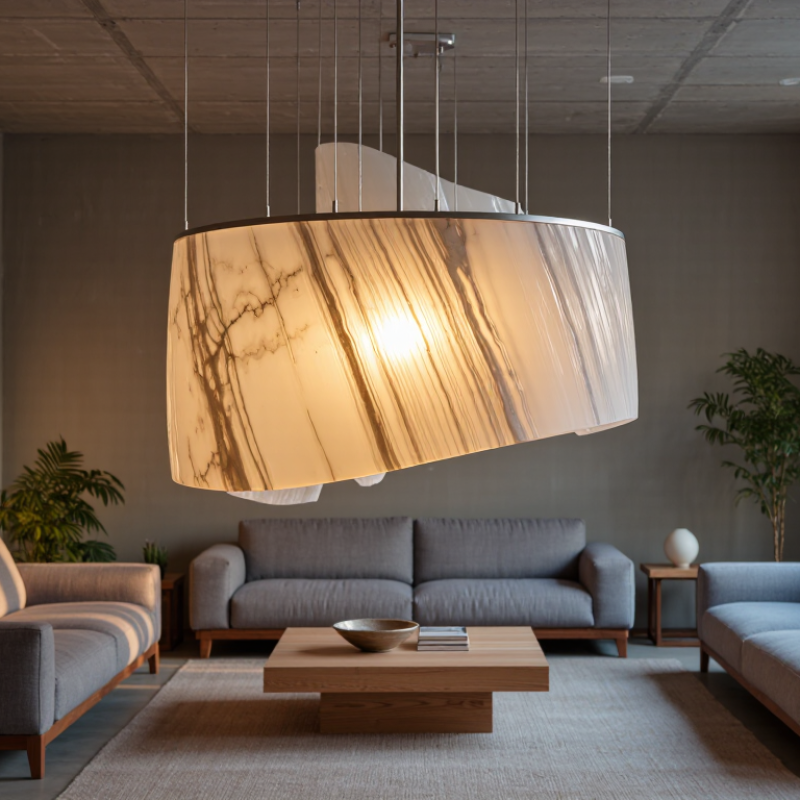
7 Tips for Choosing Hand Carved Alabaster Lighting

Understanding Alabaster and Its Lighting Qualities

Alabaster is prized for the way it softens light, not for producing it. Natural veining, mineral tone, and carving thickness all affect the final glow. Hold a sample against a lamp: a thin section may appear warmly luminous, while a thicker area can look more opaque. Subtle differences are part of the appeal. They can also make matching pieces difficult. Gypsum alabaster is relatively soft, so delicate edges and thin carved panels need careful handling. Calcite alabaster has different properties, so the material name alone does not guarantee a particular effect.

The light source matters, too. A compact LED can reduce heat around a carved shade, but its color temperature changes how the stone reads. Warm white often brings out cream and honey tones; cooler light may emphasize gray veining. Not always. The U.S. Department of Energy’s Energy Saver guidance reports that LEDs use at least 75% less energy and last up to 25 times longer than incandescent lighting. Those figures describe the lamp, not alabaster’s performance. For a practical check, view the fixture in the room where it will be used, with the intended bulb and dimmer. Stone can look richer in a showroom. That difference is easy to overlook.

Evaluating Carving Detail, Design, and Craftsmanship

Hand-carved alabaster rewards close looking. Examine the surface in soft daylight, then switch on the lamp. Light should pass through the stone with gentle variation, not expose every uneven patch as a flaw. Natural veining and small color shifts are part of the material. Still, a deep chip near an edge deserves attention. Run your eyes along the carved lines. Do they taper cleanly, or stop abruptly? Look closely.

Design matters as much as detail. A dense pattern can look delicate when unlit, then feel busy once illuminated. Consider the room’s scale and the distance from which you will see the fixture. Broad, shallow carving often casts softer shadows; deeper cuts create stronger contrast. Neither is automatically better. I might favor a bold pattern in a showroom, then find it too dominant at home. That judgment can change with the room.

Craftsmanship also shows in the transitions: where a carved panel meets its frame, where edges are softened, and whether the piece sits evenly. Ask how the alabaster is supported, since stone can be fragile around thin sections. Check that the light source is accessible for maintenance. A little asymmetry may be intentional in handwork, though it should not make the fixture feel unstable. Request a lit view if possible; photographs rarely reveal the full warmth or shadow of the stone.

Matching Light Output, Fixture Size, and Room Placement

Hand-carved alabaster softens light, but the stone’s thickness and veining can make output uneven. Judge the fixture by delivered lumens, not bulb wattage; the U.S. Department of Energy’s lighting guidance uses lumens to describe brightness. Ask whether the maker’s output figure is measured through the finished stone shade. A bare-bulb rating can overstate what reaches the room. Too dim? It happens.

Match that output to the task. The Illuminating Engineering Society’s residential lighting guidance treats illuminance as room- and activity-dependent; roughly 300 lux is a useful planning level for reading areas, not a rule for every surface. Use a dimmer where possible, then test the light beside a book or at the kitchen counter. I would not assume alabaster alone creates enough task light.

Fixture scale and placement matter just as much. Above a dining table, keep the shade low enough to make a warm pool, but high enough to preserve eye contact. In a narrow hallway, a large carved pendant can feel heavy and leave dark edges; wall sconces may distribute light more evenly. Measure the table, ceiling, and walking path before ordering. This is easy to overlook. A paper mock-up taped at the intended height can reveal glare, awkward proportions, or shadows before installation.

Checking Materials, Construction, and Installation Needs

Before buying hand-carved alabaster lighting, inspect the stone under both daylight and a warm lamp. Look for consistent translucency, natural veining, and chips around drilled openings. Small flaws matter. Ask whether the shade is solid alabaster or a thin stone veneer, and how it is supported. Alabaster varies naturally, so two pieces may not match exactly; request photographs of the actual fixture when color consistency matters.

Check how the stone meets its frame. Even, padded contact points can reduce pressure on brittle edges, while loose fittings may let the shade shift. Ask for the fixture’s weight, recommended bulb type, and cleaning instructions. A soft, dry cloth is usually safer than acidic or abrasive cleaners, which can mark the surface. I would not assume every “warm” bulb produces the same glow; test the specified color temperature if possible.

Installation deserves equal attention. Confirm that the ceiling box and mounting hardware are rated for the fixture’s weight, and have a qualified electrician assess wiring and support when specifications are unclear. The U.S. Department of Energy’s 2020 Energy Savings Forecast of Solid-State Lighting projected potential U.S. savings of 569 terawatt-hours annually by 2035 under broad LED adoption. That is a modeled estimate, not a promise for one home. Still, choosing a compatible LED can reduce operating energy and heat near delicate stone. Measure the room and fixture before installation; alabaster can feel heavier once it hangs overhead.

Planning for Cleaning, Care, and Long-Term Use

Hand-carved alabaster rewards gentle care. Its soft, translucent surface can show scratches and may be damaged by moisture, so dust it with a clean, dry microfiber cloth. Switch off the lamp and let it cool first. Small details matter. Avoid abrasive pads, acidic cleaners, and spray polish; liquid can leave marks or seep into carved crevices. If dust gathers inside a cutout, use a soft artist’s brush rather than forcing a cloth into the opening.

For deeper cleaning, check the maker’s care instructions before using any product. Test a barely damp cloth on a hidden area only if the instructions allow it, then dry the spot immediately. That may sound overly cautious. Still, a cloudy patch can be difficult to reverse. Keep the lamp away from sinks, steamy bathrooms, and direct contact with wet flowers. Check the cord, plug, and socket periodically, and ask a qualified lighting professional to address fraying or flickering.

Long-term care includes the light source. The U.S. Department of Energy reports that LEDs use at least 75% less energy and last up to 25 times longer than incandescent bulbs. Choose a compatible LED and follow the fixture’s wattage and heat limits; lower energy use does not excuse an ill-fitting bulb. Record the bulb type somewhere safe. It is a small habit, and easy to forget.

7 Tips for Choosing Hand-Carved Alabaster Lighting

A simple care-planning guide for cleaning, inspection, and long-term use.

The intervals shown are practical planning suggestions, not fixed product requirements. Dust gently with a soft, dry cloth; avoid abrasive cleaners and excess moisture, and follow the fixture maker’s care instructions.

FAQS

How can I assess the carving on an alabaster fixture?

Examine it in soft daylight, then switch on the lamp. Look for cleanly tapering lines and deep chips near the edges. Look closely.

Are natural color changes or uneven patterns defects?

Not necessarily. Veining and small shifts in color are natural. A little asymmetry may come from handwork, but the fixture should sit steadily.

Does deeper carving always look better?

No. Shallow carving often casts softer shadows, while deeper cuts create stronger contrast. A dense design may feel busy once illuminated.

How can I judge whether the fixture provides enough light?

Check delivered lumens, not just bulb wattage. Ask whether the figure was measured through the finished stone shade. A bare-bulb rating may overstate room brightness.

Is alabaster enough for reading or kitchen tasks?

Not always. Test the light beside a book or at a kitchen counter. A dimmer can help, though extra task lighting may still be needed.

What brightness is useful for a reading area?

Roughly 300 lux can be a planning reference, not a rule for every surface. Needs vary with the room and activity.

How do I choose fixture size and placement?

Measure the table, ceiling, and walking path. Above a dining table, leave room for eye contact. In a narrow hall, a large pendant can feel heavy.

Can I test the scale before ordering?

Tape up a paper mock-up at the intended height. It can reveal glare, awkward proportions, or dark edges. I might still misjudge it at first.

Conclusion

Choosing Hand-Carved Alabaster Lighting begins with understanding how the stone’s natural patterns and translucence shape the glow. Each piece can diffuse light softly, while variations in color and veining give it a distinctive appearance. Examine the carving closely: balanced proportions, clean details, and thoughtful workmanship help a fixture feel refined and harmonious with the room’s style.

Consider practical needs alongside appearance. Choose a light output and fixture size suited to the room, and plan placement so the alabaster’s glow complements other lighting. Check the materials, construction, mounting method, and installation requirements before buying, especially for heavier fixtures. Finally, learn how to clean and care for the stone, and consider how it may age with regular use. These steps can help you select a fixture that is beautiful, functional, and suited to your space over time.

Olivia

Olivia

Olivia is a dedicated marketing professional with extensive experience in developing clear, engaging, and results-oriented content for modern businesses. As a key contributor to the company’s marketing team, she combines strong industry knowledge with a deep understanding of customer needs, market......