
Handcrafted decorative lighting since 1980 · Worldwide project support

0%

Choosing reliable China Top 10 Convertible Pendants Suppliers requires more than comparing catalog photos or factory claims. Convertible Pendants can transform from a necklace centerpiece into earrings, brooches, or layered jewelry pieces. That flexibility demands accurate engineering, secure clasps, balanced weight, and consistent finishing. A supplier should demonstrate practical experience with materials, stone setting, plating, mold development, and small-batch production. Factory videos help, but they are not enough.

This guide examines leading Chinese suppliers through clear, business-focused criteria. These include manufacturing capacity, customization services, quality-control procedures, export experience, communication, certifications, and customer feedback. Samples deserve attention. Inspect the clasp tension, surface polish, stone alignment, and packaging before approving larger orders. Small details often reveal production discipline. Very clearly.

The ranking should not be treated as an official industry verdict. Supplier capabilities change, and online information may become outdated. That is an important limitation. Buyers should request current catalogs, material declarations, inspection records, lead times, and quotation terms directly from each company. Independent testing may also be appropriate for precious-metal content and plating durability. This introduction aims to support careful sourcing, not promote unverified promises. With realistic comparisons and direct verification, buyers can identify Convertible Pendants suppliers that match their design goals, budget, quality expectations, and target market.
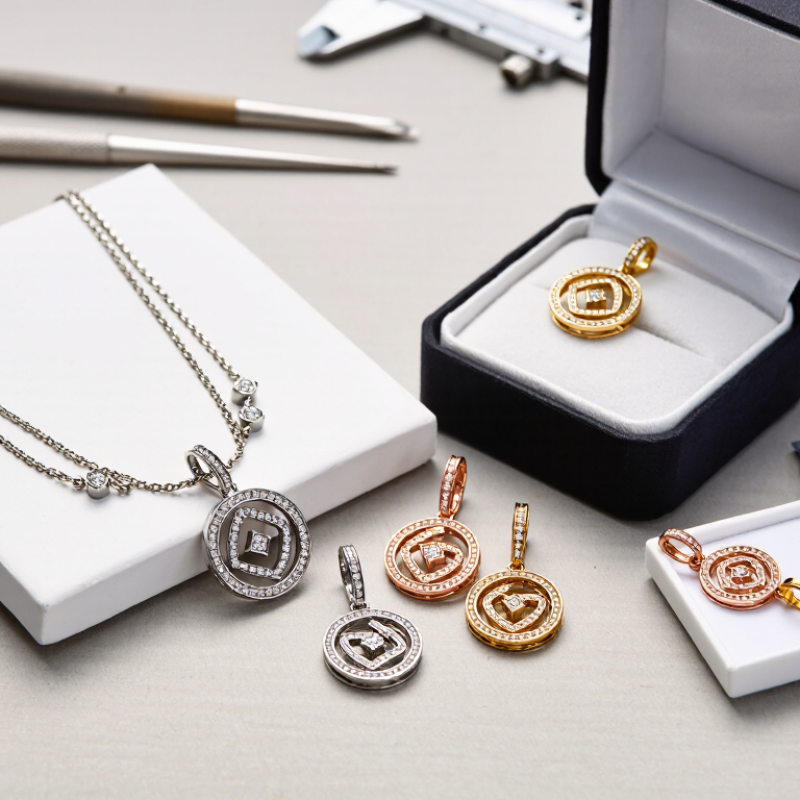
China Top 10 Convertible Pendants Suppliers?

What Are Convertible Pendants and How Do They Work?

A convertible pendant is jewelry designed to change its form or function. One piece may work as a necklace pendant, brooch, or charm. The transformation usually depends on a hidden bail, removable pin, swivel loop, or interchangeable connector.

Small parts matter.

For example, a pendant can slide onto a chain through a hinged bail. Close the bail, and the pendant stays centered. Open it, and you can move the piece to another chain or bracelet.

Some designs include a concealed brooch fitting on the back. Others use magnetic connectors, although magnets require careful testing for strength, alignment, and long-term wear.

In practical product inspections, I check whether the mechanism opens smoothly without feeling loose. A beautiful design is not enough.

Material choice affects both comfort and durability. Stainless steel, sterling silver, and gold-plated alloys behave differently under friction, moisture, and repeated movement. Plating may wear around connector points first. That detail is easy to miss.

Suppliers should provide clear dimensions, metal specifications, surface-finish information, and sample testing before large orders. I would also test the pendant with different chain thicknesses, because a bail that fits one chain may reject another.

This is where product descriptions can be imperfect. Measurements need confirmation, not assumptions. Secure closures, rounded edges, and consistent assembly help reduce snagging and accidental loss during normal use.

How to Evaluate China’s Convertible Pendant Suppliers

China Top 10 Convertible Pendants Suppliers? How to Evaluate China’s Convertible Pendant Suppliers

Evaluating a Chinese convertible pendant supplier requires more than checking catalog photos. Request a physical sample first. Test the clasp, hinge, bail, and interchangeable parts repeatedly. A pendant that looks elegant may loosen after several conversions. Measure plating thickness, stone security, pendant weight, and chain compatibility. Ask for material reports, production photographs, and a clear inspection standard.

The World Gold Council reported global jewellery demand of about 1,877 tonnes in 2024. This pressure makes material accuracy and cost control increasingly important. Check whether stated gold, silver, or stainless-steel grades match independent test results. Review factory quality records, corrective-action reports, and batch traceability. An ISO 9001 certificate helps, but it does not replace an on-site audit. That is easy to forget.

Compare suppliers through a small pilot order. Examine color consistency under daylight, polished edges, thread strength, and packaging protection. Confirm sampling fees, mold ownership, minimum order quantity, lead time, and replacement terms in writing. Ask how defects are counted under their AQL plan. A low quotation can hide weak hinges or expensive revisions. My own evaluation would score product durability higher than initial price, although this can reduce short-term sourcing flexibility. Supplier ratings should be updated after every shipment, not treated as permanent facts.

China Top 10 Convertible Pendants Suppliers? - How to Evaluate China’s Convertible Pendant Suppliers

Rank Anonymous Supplier ID Main Convertible Pendant Types Common Materials Typical MOQ Sample Lead Time Bulk Lead Time Customization Capability Quality and Compliance Documents to Request Evaluation Score
1 Supplier A Necklace-to-brooch, pendant-to-charm, detachable pendant systems 925 sterling silver, brass, stainless steel, plated alloys 50–100 pcs 7–12 days 20–30 days CAD development, logo engraving, stone selection, plating, packaging Material composition, plating thickness, nickel/lead/cadmium test, pre-shipment inspection 9.2/10
2 Supplier B Interchangeable gemstone pendants, locket pendants, chain-compatible designs 925 silver, cubic zirconia, synthetic stones, enamel 100–200 pcs 10–15 days 25–35 days 3D files, color matching, stone setting, private-label cards and boxes Stone specifications, plating test, dimensional inspection, packaging approval 8.9/10
3 Supplier C Convertible pendant earrings, modular necklace components, reversible pendants Stainless steel, brass, resin, glass stones 200–500 pcs 8–14 days 20–30 days Mold modification, color plating, resin color, logo stamping REACH or equivalent substance testing, clasp-cycle testing, colorfastness report 8.6/10
4 Supplier D Bail-convertible pendants, interchangeable charms, pearl pendant designs Sterling silver, freshwater pearls, brass, plated zinc alloy 100–300 pcs 10–16 days 25–40 days Pearl grading, metal finish, clasp design, branded inserts Pearl grading criteria, metal test, pull-strength test, visual AQL inspection 8.4/10
5 Supplier E Two-in-one necklaces, detachable centerpiece pendants, layered pendant sets Brass, stainless steel, glass, synthetic gemstones 300–500 pcs 12–18 days 30–40 days Existing-mold adaptation, plating colors, chain length, retail packaging Material declaration, coating adhesion test, clasp function test, AQL report 8.1/10
6 Supplier F Personalized photo pendants, engraved pendants, charm conversion pieces Stainless steel, sterling silver, acrylic, enamel 100–250 pcs 10–15 days 25–35 days Laser engraving, image transfer, UV printing, custom cards Print durability test, metal composition, image approval, packaging inspection 7.9/10
7 Supplier G Fashion pendants, seasonal interchangeable charms, costume jewelry sets Zinc alloy, brass, acrylic, artificial stones 500–1,000 pcs 7–12 days 20–30 days Catalog customization, color changes, logo stamping, barcode labels Heavy-metal test, coating adhesion, color consistency, carton drop test 7.7/10
8 Supplier H Minimalist reversible pendants, chain-and-charm combinations, everyday jewelry 316L stainless steel, brass, glass, enamel 300–800 pcs 10–14 days 25–35 days Laser marking, chain adjustment, finish selection, simple packaging Stainless-steel grade confirmation, corrosion test, clasp inspection 7.5/10
9 Supplier I Bohemian pendant sets, convertible tassel pendants, mixed-material designs Alloy, leather, cotton cord, wood, resin 500–1,000 pcs 12–18 days 30–45 days Color combinations, tassel length, cord selection, hangtags Material safety declaration, accessory pull test, colorfastness inspection 7.2/10
10 Supplier J Entry-level interchangeable pendants, promotional jewelry, basic charm systems Zinc alloy, stainless steel, acrylic, synthetic crystal 1,000–2,000 pcs 8–14 days 25–40 days Existing design selection, basic plating, logo packaging, barcode labeling Heavy-metal test, finish inspection, packaging specification, final AQL report 6.9/10
Evaluation note: The comparison uses practical purchasing criteria for convertible pendants, including minimum order quantity, development speed, customization depth, material control, testing documentation, and production consistency. Lead times and MOQs are typical quotation ranges and should be confirmed in writing before ordering.

China’s Top 10 Convertible Pendant Suppliers

China’s top 10 convertible pendant suppliers are often distinguished by manufacturing capability, not advertising language. A practical shortlist should include suppliers with expertise in reversible pendants, detachable chains, interchangeable settings, and custom metalwork. Look for factories that provide clear material certificates, production photographs, and sample approval records. These details reveal more than polished catalog pages.

The strongest candidates usually cover ten useful profiles: precision casting workshops, handmade jewelry studios, OEM manufacturers, ODM design houses, silver specialists, gold-plated accessory factories, gemstone-setting workshops, small-batch producers, export-focused suppliers, and inspection-supported manufacturers. Each profile serves a different purchasing need. Ask about alloy composition, plating thickness, clasp strength, stone security, and tolerance between detachable parts. A pendant that converts smoothly should not feel loose or noisy during wear. Request a physical sample before placing a larger order. Always.

Factory visits or live video inspections can confirm machinery, finishing benches, packaging areas, and quality records. However, online evidence can still be incomplete. Some supplier pages show their best samples only. That is a weakness worth acknowledging. Compare sample quality with the promised production process, and require written specifications for dimensions, weight, finish, and packaging. Check whether the supplier accepts reasonable revisions after testing. Experienced buyers also review response speed and problem-solving behavior, because communication often affects delivery quality as much as equipment does.

Supplier Comparison: Designs, Materials, Prices, and Capabilities

China Top 10 Convertible Pendants Suppliers?

Comparing China’s leading convertible pendant suppliers requires more than checking catalog photos. Strong suppliers offer adjustable chains, removable charms, reversible settings, and secure connectors. Their designs should feel practical, not merely decorative. Samples expose problems. Ask for CAD drawings, clasp tests, and clear size measurements before ordering.

Materials strongly affect durability and price. Common options include 925 sterling silver, stainless steel, brass, and gold-plated alloys. Request coating thickness, base-metal details, and independent testing for restricted substances. A polished sample may still hide weak plating. Inspect edges, solder points, stone settings, and connector movement under repeated use.

Prices often range from about 2 to 18 US dollars per piece, depending on material, finish, customization, and order volume. Low minimum quantities suit testing, while larger factories may provide better tooling, packaging, and production scheduling. Smaller workshops can offer more flexible design changes. Their documentation may be less consistent, though. Review factory photos, quality records, export experience, and sample approval procedures. I would not judge capability from price alone. A cheap quotation can become expensive after revisions, delays, or rejected goods. Supplier communication matters too. Clear replies usually reveal stronger control.

How to Choose the Right Chinese Convertible Pendant Supplier

China Top 10 Convertible Pendants Suppliers?

Choosing a Chinese convertible pendant supplier requires more than comparing prices or catalog photos. A pendant that changes into a brooch or necklace needs accurate hinges, secure clasps, and balanced weight. Ask each supplier for close-up videos of the conversion process. Request samples before discussing large orders. Check whether the parts move smoothly after repeated use. Small flaws matter.

A reliable supplier should explain material grades, plating thickness, stone settings, packaging, and inspection procedures clearly. Request a written specification sheet. It should include dimensions, tolerances, minimum order quantity, production time, and replacement terms. You can also ask for factory audit records and relevant product testing documents. Do not accept vague claims about quality. Clear evidence is more useful.

Communication reveals practical capability. Send one technical drawing and observe the response. Does the supplier identify weak points, or simply promise everything? Experienced manufacturers may suggest stronger connectors or simpler assembly methods. That advice can reduce defects. Still, their recommendation should be tested through a pre-production sample. I have learned that a confident sales message is not proof of manufacturing skill. Even a good supplier may misunderstand one measurement. Confirm every detail in writing, including color references and logo placement. Keep approval samples for later comparison. The cheapest quotation can become expensive when rework, delays, or inconsistent finishing appear.

FAQS

What should I look for in a convertible pendant supplier?

Look for reversible designs, detachable chains, interchangeable settings, and custom metalwork. Ask for material certificates, production photos, and sample approval records. Catalog pages are not enough.

Which materials are commonly used for convertible pendants?

Common choices include 925 sterling silver, stainless steel, brass, and gold-plated alloys. Request base-metal details and coating thickness. A bright finish can still hide weak plating.

How much do convertible pendants usually cost?

Prices often range from about 2 to 18 US dollars per piece. Material, finish, customization, and order volume affect the price. Cheap can become expensive.

Why should I request a physical sample?

A sample reveals loose connectors, weak clasps, rough edges, and unstable stone settings. Test the pendant repeatedly before approving production. Always request one.

What technical details should suppliers provide?

Request dimensions, weight, tolerances, plating thickness, packaging, and minimum order quantity. The specification sheet should also include production time and replacement terms. Written details prevent confusion.

How can I test the conversion mechanism?

Ask for close-up videos showing the pendant changing between forms. Check hinges, clasps, connector movement, and balance during wear. It should feel smooth, not noisy.

Should I choose a large factory or a small workshop?

Larger factories may offer stronger scheduling, tooling, packaging, and quality systems. Small workshops often handle design changes more flexibly. Their records may be less consistent, though.

Can online evidence prove a supplier’s manufacturing ability?

Online photos can show machinery, finishing benches, packaging areas, and inspection records. However, suppliers may display only their best samples. Compare videos, documents, and physical samples. I would stay cautious.

Conclusion

This guide explores Convertible Pendants, versatile jewelry pieces designed to transform between different styles, such as a pendant, brooch, or detachable accessory. It explains how their interchangeable structures work, including removable components, secure clasps, adjustable chains, and multi-purpose settings. Readers will also learn how to evaluate Chinese suppliers by reviewing product quality, material options, manufacturing experience, customization services, sample policies, communication, packaging, and delivery capabilities.

The article presents a practical comparison of China’s top ten Convertible Pendant suppliers without focusing on brand names. It examines their design flexibility, craftsmanship, available metals and decorative materials, pricing levels, minimum order quantities, production capacity, and ability to support private-label or custom projects. Finally, it offers a clear selection framework to help buyers identify the most suitable supplier based on their target market, budget, order volume, design requirements, quality expectations, and long-term cooperation goals.

Olivia

Olivia

Olivia is a dedicated marketing professional with extensive experience in developing clear, engaging, and results-oriented content for modern businesses. As a key contributor to the company’s marketing team, she combines strong industry knowledge with a deep understanding of customer needs, market......