
Handcrafted decorative lighting since 1980 · Worldwide project support
What Are the Top Types of Convertible Chandeliers in 2026? The answer depends on what “convertible” means: some fixtures adjust in height, while others shift between mounting styles or lighting configurations. Manufacturers do not use one universal definition. Check the product’s conversion mechanism, listed dimensions, and installation instructions before comparing designs.
Useful context comes from the U.S. Department of Energy’s LED guidance: LED bulbs use at least 75% less energy and can last up to 25 times longer than incandescent bulbs. That does not mean every convertible chandelier saves energy; the result depends on its bulbs, controls, and use. A caveat matters.
Lighting designer Randall Whitehead is often quoted describing lighting as “the jewelry of the home.” His observation fits chandeliers particularly well: a fixture must look right, but it also needs to light the table, soften a ceiling, or serve another clear purpose. In this guide, we’ll compare adjustable-height, multi-position, modular, and smart-compatible designs, noting where features vary by brand. Some models promise flexibility but require extra parts or careful installation. Read the details closely.
The best choice is not automatically the most adjustable. Consider ceiling height, room scale, bulb compatibility, and how often you expect to change the setup. These details help separate useful versatility from a feature that sounds better on a product page than it feels in daily use.
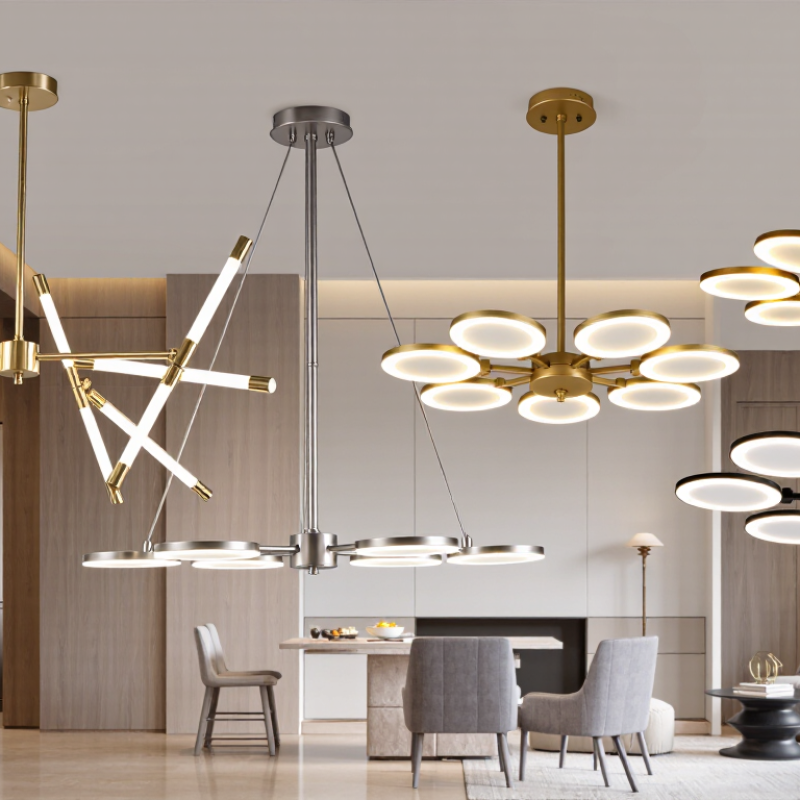
A convertible chandelier is a light fixture designed to change its configuration or function, rather than remain in one fixed arrangement. Conversion may mean adjusting its hanging height, changing the direction of its arms, or switching between chandelier and semi-flush mounting. The exact options depend on the fixture’s design, so “convertible” does not mean every part can be rearranged. That distinction matters.
Common designs include adjustable-height chandeliers, fixtures with pivoting arms, and models that can be installed close to the ceiling or suspended lower. A height-adjustable fixture can suit a dining table today and a taller room later. Pivoting arms can help direct light across a wider area, though they may need occasional adjustment to stay balanced. Some fixtures offer more than one mounting position. Others only allow limited changes.
Before choosing one, check which parts actually convert and whether the required hardware is included. Look for clear installation instructions, compatible ceiling support, and a stated range for height or movement. For example, a fixture that drops several inches may still feel too low over a narrow walkway. Also consider how the light looks when switched off; exposed joints or unused mounting pieces can affect the room. A convertible design adds flexibility, but it can add complexity, too.
Height-adjustable chandeliers suit rooms where ceiling height varies or furniture may move. For dining tables, common American Lighting Association guidance places the fixture’s bottom 30–36 inches above the tabletop with an eight-foot ceiling. Taller ceilings often need additional clearance adjustments. Measure from the actual tabletop, not the floor. A telescoping downrod offers a clean, rigid look, while an adjustable cable makes fine height changes easier. Sloped-ceiling adapters can help keep the fixture centered. Measure twice.
In foyers, a chandelier should feel visible without crowding the walking path or blocking sightlines from an upper landing. Adjustable suspension helps, but the longest setting is not automatically the right one; check the fixture from both the entrance and stairs. U.S. Department of Energy guidance estimates that lighting uses about 15% of household electricity, so pairing the chandelier with efficient bulbs and compatible dimming can reduce unnecessary output. The figure is a broad household estimate, not a promise of savings from one fixture. Real rooms are less tidy than diagrams. Before installation, test the planned drop with string or a temporary weight, then reconsider it when the furniture and nearby doors are in place.
Plug-in and hardwired convertible chandeliers offer flexible installation while keeping one fixture style. A plug-in model hangs from a rated ceiling support, with its cord routed toward a nearby outlet. Convenient, but visible. This option can suit renters or rooms where opening the ceiling is difficult, provided the fixture and support are compatible.
For a cleaner look, the same fixture may be wired into a ceiling junction box and finished with a canopy. Remove the cord and plug only when the manufacturer’s conversion instructions allow it; not every “convertible” design supports both setups.
Check that the ceiling box can carry the chandelier’s weight, and turn off power before electrical work.
The choice depends on room layout, ceiling construction, and how permanent you want the installation to feel. Measure the cord path before buying; a long cord crossing a doorway can look awkward, even when neatly clipped. Hardwiring usually hides the cable, but connecting conductors is best left to a qualified electrician if you lack the right training. Check dimmer compatibility and bulb limits, too. Small details matter.
Convertible chandeliers in 2026 are valued for changing how a room feels, not just how it looks. Many models shift between a hanging chandelier, a pendant, and a semi-flush fixture by adjusting chain or stem length. In a dining room, a longer drop can center light above the table. Raised closer to the ceiling, the same fixture may suit a low-ceiling entry. Small change. Big difference.
Practical types use removable chains, telescoping stems, or modular arms. A multi-arm design can suit an open living space, while a compact pendant-style body fits a kitchen or narrow hall. Semi-flush mode brings the fixture closer to the ceiling without removing its decorative detail. Check whether conversion parts are included and whether the fixture is approved for each configuration. Some designs offer less adjustment than their photos suggest. That detail is easy to miss.
Tips: Measure ceiling height and table clearance before choosing a hanging length. Confirm that the canopy and mounting hardware work in every mode. If changing configurations means handling wiring, ask a qualified installer; it is not always a quick adjustment.
Modern convertible chandeliers bring clean lines to rooms that need flexible lighting. Many feature simple metal frames, clear glass, or exposed bulbs. They can hang over a dining table or sit closer to the ceiling when the room feels crowded. Check the fixture’s conversion method before choosing; not every design works with every ceiling setup. Keep the silhouette restrained. Traditional styles offer more detail, with curved arms, candle-shaped bulbs, and glass or fabric shades. These designs can suit formal dining rooms and older homes, but ornate finishes may feel heavy in a small space. That can be easy to miss in a showroom.
Transitional chandeliers blend traditional shapes with quieter finishes and simpler details. A softened brass frame or gently curved arms can connect classic furniture with modern walls. The balance is useful, though it is not always effortless: a fixture can look plain beside ornate furnishings or fussy in a minimal room. Compare its proportions with the table and ceiling height. Measure twice. Also confirm that the included hardware supports both hanging and close-to-ceiling installation. Follow the installation instructions, and ask a qualified electrician if the wiring or mounting needs changes. Small details matter, especially when the light is meant to serve more than one room style.
A qualitative comparison of modern, traditional, and transitional design profiles.
Scores use an editorial 1–5 scale to summarize common visual characteristics: 1 means low and 5 means high. They describe style conventions, not sales, market share, or measured consumer preference. Convertible chandeliers can vary in finish, shade, and configuration within each style.
It can change height, arm direction, or mounting position. Not every part moves. Check the actual design.
No. Some models support both suspended and semi-flush mounting; others allow only limited changes. Check the included hardware.
With an eight-foot ceiling, guidance suggests 30–36 inches above the tabletop. Measure from the table, not the floor. Measure twice.
Keep it visible without blocking walkways or sightlines from an upper landing. Test the drop with string, then check nearby doors and furniture. Rooms are messier than diagrams.
A telescoping downrod gives a rigid look. An adjustable cable makes fine height changes easier. A sloped-ceiling adapter may help center the fixture.
Sometimes. Pivoting arms can spread light across a wider area, but may need occasional adjustment to stay balanced. Easy to overlook.
Modern designs with clean lines can feel less crowded. Ornate traditional fixtures may look heavy, though proportions matter more than style labels.
Efficient bulbs and compatible dimming can reduce unnecessary light output. Household lighting uses about 15% of electricity, but that estimate does not promise savings from one fixture.
Ask a qualified electrician if wiring or mounting needs changes. Follow the fixture’s installation instructions. I would not guess here.
Convertible Chandeliers offer flexible lighting solutions that can adapt to changing rooms, ceiling heights, and decorating needs. Many designs include adjustable suspension systems, allowing the fixture to hang lower over a dining table or sit higher in a room with a tall ceiling. Some models can be installed as plug-in fixtures for simpler placement, while others are hardwired for a clean, permanent finish.
A key feature of these chandeliers is their ability to shift between configurations, such as chandelier, pendant, and semi-flush mount, making them useful in spaces where layout or lighting preferences may change. In 2026, popular choices span modern designs with streamlined shapes, traditional styles with familiar decorative details, and transitional options that blend elements of both. By considering the mounting method, adjustment range, room proportions, and preferred style, homeowners can choose a convertible fixture that balances practical function with visual appeal.