Outdoor Post Mount Lights do more than mark a driveway; they shape the first impression of a path, porch, or garden. The right style balances useful visibility with the scale and character of the property. Common choices include classic lanterns, modern cylinders, pagoda-inspired fixtures, and open globe designs. Each creates a different effect. A clear-glass lantern can spread light broadly, while a hooded fixture directs more light downward. At dusk, that difference can change how clearly visitors see steps or a walkway. Still, choosing by appearance alone is an easy mistake.
This guide explores the main types and the settings where they tend to work well. It also considers practical details: fixture height, light direction, material, bulb compatibility, and outdoor weather protection. A tall post may suit a broad entrance, while a compact fixture can look more balanced beside a narrow garden gate. Finish matters, too; dark metal may stand out against pale stone, but it can disappear against a shadowed fence. There is no single best design for every home. Even attractive lights can disappoint if they create glare or leave dark patches. Comparing style with placement helps narrow the options before you buy. A little measuring helps. When evaluating products, check the manufacturer’s specifications and confirm that the fixture suits your existing post and electrical setup.
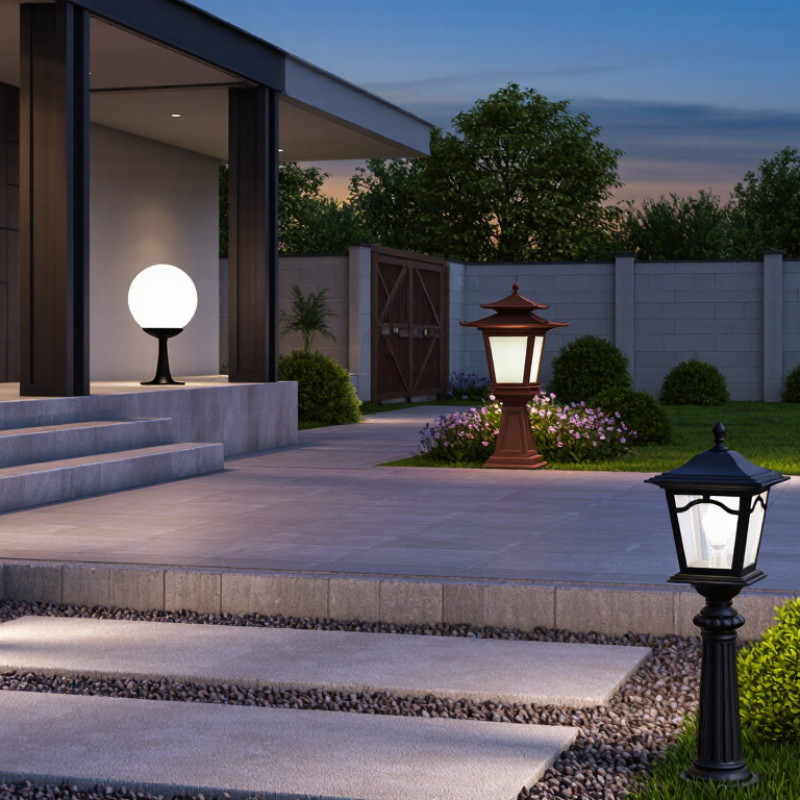
Common Types of Outdoor Post Mount Lights
Outdoor post mount lights commonly fall into lantern, globe, contemporary, and shielded styles. Lantern fixtures have framed glass panels and suit porch entries or driveway gates. Their clear panes show dust quickly, so check how easily the glass opens for cleaning. Globe designs spread light in several directions, which can help illuminate a path junction. They may also send glare toward nearby windows if mounted too high.
Contemporary fixtures often use compact cylinders or flat, downward-facing shades. Shielded models direct more light onto steps and paving, rather than into the sky. A narrow beam can look neat, but it may leave dark patches between posts. Solar post lights avoid wiring and work best where the panel receives steady daylight; cloudy weather can reduce runtime. Small trade-offs matter.
The U.S. Department of Energy’s LED lighting guidance reports that LEDs use at least 75% less energy and can last up to 25 times longer than incandescent bulbs. Those figures describe LED lighting generally, not post-mount fixtures specifically. Still, they are useful when comparing compatible light sources.
For a practical choice, check the fixture’s wet-location rating, post-cap dimensions, brightness, and color temperature. Warm light can feel gentler near a seating area; cooler light may make a dark gate easier to see. I would not choose by appearance alone.
Traditional Lantern-Style Post Lights
Traditional lantern-style post lights suit entry walks, garden gates, and driveways where a familiar profile feels at home. Framed glass panels show the bulb, while a cap or finial adds a quiet architectural detail. Choose the proportions carefully. A tall lantern can overwhelm a narrow path, while a small one may disappear beside a broad gate. The silhouette is classic, though sometimes too decorative for a clean-lined home.
Glass changes the mood. Clear panes create crisp points of light, but they can expose glare and visible bulbs. Frosted or seeded glass softens the glow and conceals minor dust, though it also reduces sparkle. I would check the fixture at dusk before choosing. Warm light, around 2700–3000 kelvin, often feels welcoming near an entrance. Aim light downward where possible, and avoid brightness that spills into bedrooms or the night sky.
Efficiency need not change the traditional look. The U.S. Department of Energy’s Energy Saver guidance reports that LEDs use at least 75% less energy than incandescent bulbs. It also says they can last up to 25 times longer. These figures describe LED lighting broadly, not every lantern fixture, so confirm bulb compatibility and dimming performance. Check the mounting plate, weather rating, and cleaning access, too. Decorative seams can collect grime. Small detail, big difference.
Traditional Lantern-Style Post Lights: Typical LED Brightness Equivalents
Compare common incandescent-equivalent brightness levels when choosing a bulb for a lantern-style outdoor post light.
Values are approximate general lighting equivalents: 40 W ≈ 450 lumens, 60 W ≈ 800 lumens, 75 W ≈ 1,100 lumens, and 100 W ≈ 1,600 lumens. Actual brightness may vary by bulb and fixture.
Modern and Minimalist Post Lights
Modern and minimalist post lights suit homes with clean lines, pale masonry, or simple timber fencing. Common forms include slim square posts, narrow cylinders, and flat-topped fixtures with concealed light sources. Their restrained shapes keep attention on the path, not the hardware. Look closely at the finish, too. Matte black can sharpen a light-colored walkway, while bronze or dark gray often blends into planting beds.
In practice, scale matters more than ornament. A tall, broad post can overpower a small entry, while a very slim fixture may disappear beside a stone wall. Check the mounting height and spacing against the actual path before buying; a paper template can reveal awkward proportions. Warm-white light can make brick and wood feel inviting, but overly bright, exposed lamps create glare. There is no perfect formula.
Efficiency is part of the design choice. The U.S. Department of Energy reports that LED lighting uses at least 75% less energy and can last up to 25 times longer than incandescent lighting. Choose a shielded LED fixture with a replaceable light source where possible. Dimming can help. Still, minimalist fixtures sometimes sacrifice easy servicing for a seamless shell, so inspect how the lamp and driver are accessed.
Solar-Powered and Low-Voltage Post Lights
Solar-powered and low-voltage post lights suit different outdoor settings. Solar models collect energy during daylight, then illuminate paths, gates, or garden borders after dusk. They avoid buried power cables, but shaded yards and short winter days can reduce runtime. A small panel covered with dust may also perform poorly. It is convenient, not magic.
Low-voltage lights use a transformer and cable connected to a power supply. They can provide steadier illumination near a driveway or front walk, though cable length and placement matter. The U.S. Department of Energy reports that LED bulbs use at least 75% less energy and last up to 25 times longer than incandescent bulbs. This applies to LED options in either system, not to every fixture’s total energy use. Check the product’s weather rating and compatible bulb details before buying.
Tips: Watch one spot at dusk. If it stays shaded, choose low voltage or test a solar light there for several evenings. For wired layouts, sketch the cable route first; long runs can cause voltage drop. I have seen neat plans become awkward when a path curves around a tree. DOE, “LED Lighting,” Energy Saver.
What Are the Top Types of Outdoor Post Mount Lights? - Solar-Powered and Low-Voltage Post Lights
| Post Light Type |
Power Source |
Typical Light Output |
Installation |
Best Suited For |
Key Considerations |
| Integrated Solar LED Post Light |
Built-in photovoltaic panel charges an internal rechargeable battery during daylight. |
Often designed for accent or pathway lighting; output varies by model and conditions. |
Usually mounts directly to a compatible post or post cap. No electrical wiring is typically needed. |
Posts in sunny, open locations where straightforward installation is a priority. |
Shade, short winter days, dirt on the panel, and battery age can reduce nighttime runtime and brightness. |
| Solar Post Light with Separate Panel |
A remote solar panel charges the light’s battery through a cable. |
Varies by product; the separate panel can be positioned to receive better sunlight. |
Requires mounting the light and positioning the panel in a sunny spot; cable routing may be needed. |
Posts that are shaded while a nearby wall, fence, or open area receives sunlight. |
Check cable length, panel placement options, and whether the battery is replaceable. |
| Low-Voltage Integrated LED Post Light |
Typically supplied by a low-voltage landscape-lighting system, commonly 12 volts in North American residential installations. |
Product-dependent; often provides more consistent illumination than small solar accent lights. |
Connects to low-voltage landscape cable and a compatible transformer. Installation planning is required. |
Driveways, paths, and outdoor areas where reliable, scheduled lighting is wanted. |
Transformer capacity, cable layout, connections, and fixture compatibility affect system performance. |
| Low-Voltage Post Light with Replaceable Bulb |
Powered by a low-voltage landscape-lighting circuit; uses a compatible replaceable lamp. |
Depends on the lamp type and rating selected for the fixture. |
Wired to the low-voltage system; the lamp can generally be replaced without replacing the entire fixture. |
Installations where lamp replacement or future changes in light output are useful. |
Confirm the required lamp base, maximum wattage, and any fixture-specific bulb restrictions. |
Light output, runtime, and installation requirements vary by fixture. Check the product specifications and local electrical requirements before purchase or installation.
Conclusion
Outdoor Post Mount Lights come in a variety of styles and configurations to suit different outdoor spaces and lighting needs. Traditional lantern-style designs bring a familiar, timeless look, while modern and minimalist options use clean lines and simple forms to complement contemporary settings. The best choice depends on the appearance you want and how the light will be used.
Power and purpose are also important considerations. Solar-powered and low-voltage post lights offer alternatives for illuminating outdoor areas, while decorative and pathway lights can add visual interest and help define routes. Security-focused post lights are designed to provide practical illumination around entrances and property boundaries. By comparing style, power source, brightness, and placement, homeowners can select outdoor post lighting that balances function and appearance.