
Handcrafted decorative lighting since 1980 · Worldwide project support

0%

A bathroom mirror reveals details that softer room lighting can hide. Uneven shadows may obscure shaving lines, makeup edges, or small marks on the skin. That is why Bathroom Vanity Lights deserve more attention than their decorative role suggests. Well-planned LED fixtures can provide useful, even illumination while using less energy than many traditional lamps. They also offer long service life, though actual performance depends on product quality and daily use.

Lighting designer Randall Whitehead is often quoted as saying, “Lighting is the jewelry of the home.” The thought fits a vanity area: a pair of carefully placed sconces can frame a mirror, while a clean-lined LED bar can keep a compact room feeling uncluttered. But appearance is only part of the decision. Light color, brightness, glare control, and fixture placement all affect how comfortable the mirror feels at 7 a.m. A high color-rendering index can help skin tones look more natural. A dimmer can make evening routines less harsh.

Small details matter.

LEDs are not automatically the right choice for every bathroom. Check the fixture’s damp-location rating, confirm that its size suits the mirror, and avoid aiming bare light directly at eye level. Installation conditions vary, so a qualified electrician can assess wiring and placement when needed. One honest caveat: a bright fixture can still feel unflattering if it sits too high or casts shadows beneath the eyes. Thoughtful Bathroom Vanity Lights balance practical visibility with a calmer, more welcoming room—and the best choice depends on the space, not just the label.
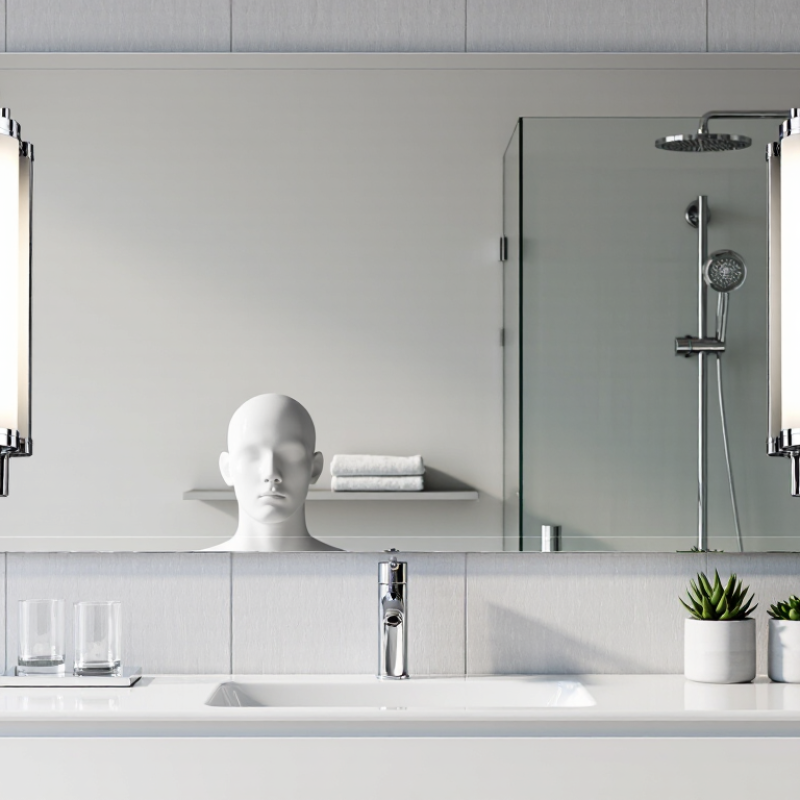
Why Choose LED Bathroom Vanity Lights?

What LED Bathroom Vanity Lights Are and How They Work

LED bathroom vanity lights use light-emitting diodes to produce light with relatively little energy. Inside each diode, electrical current causes electrons to release photons. A driver converts household alternating current into the controlled current the LEDs need. The fixture’s diffuser then softens and spreads the light across the mirror. Placement matters.

Color temperature affects how the room feels: warmer light appears softer, while cooler light can look crisper. For grooming, check the fixture’s color rendering index, or CRI; a higher value generally shows skin and makeup colors more accurately.

It is easy to assume brighter is always better, but harsh glare can make a small bathroom uncomfortable. Choose a suitable damp-rated fixture for its location, and follow its installation instructions. Ask a qualified electrician if wiring or placement is uncertain.

Tips: Measure the mirror before choosing a fixture. Check that the light reaches both sides of your face without shining directly into your eyes. One detail worth reconsidering: a bulb’s color may look different against your wall paint.

How LED Technology Improves Bathroom Lighting

LED bathroom vanity lights can provide steady, immediate illumination for shaving, makeup, and skincare. They reach full brightness without a warm-up pause. Their compact design also suits slim fixtures beside or above a mirror. Placement matters, though. A bright ceiling light alone can leave shadows beneath the eyes and chin.

Light quality affects what you see. Look for a high color-rendering index, such as CRI 90 or above, to help skin tones appear more natural. A color temperature around 3000K to 4000K often feels clear without looking overly blue. Cooler light can seem crisp, but sometimes clinical. Dimming is useful for winding down, provided the fixture and dimmer are compatible. Check the fixture’s damp-location rating, too; bathrooms hold moisture.

Tips: For fewer facial shadows, consider matching vertical lights on both sides of the mirror. If you use an overhead fixture, aim for even coverage rather than a harsh beam. Test the light at different times of day. Small details matter. LED light is efficient, but it cannot fix poor placement or an uncomfortable color tone.

Practical Benefits for Daily Grooming and Bathroom Use

Why Choose LED Bathroom Vanity Lights?

Practical Benefits for Daily Grooming and Bathroom Use

Good vanity lighting makes everyday tasks easier. A well-placed LED fixture can reduce harsh shadows around the eyes and chin, helping you shave, apply makeup, or check small details. Light directed toward the face from both sides of a mirror often looks more even than a single ceiling light. Details matter. A bright bulb alone cannot fix poor placement.

LEDs also use less electricity and need fewer replacements. The U.S. Department of Energy reports that LED lighting uses at least 75% less energy and can last up to 25 times longer than incandescent lighting. Those figures describe general LED performance; actual results depend on the product and use. In a bathroom used every morning, longer service life can mean fewer awkward bulb changes above a sink.

Still, LEDs are not automatically better for every face. Check the color rendering index (CRI) and color temperature before choosing a fixture. A high-CRI light can make skin tones and clothing colors appear more faithfully, while a comfortable, neutral tone may suit daily grooming. Very cool light can feel clinical. Very warm light may make color matching harder. A small mirror-side test helps, though bathroom finishes can affect how light appears.

Why Choose LED Bathroom Vanity Lights? – Practical Benefits for Daily Grooming and Bathroom Use

Practical Benefit What It Means Everyday Grooming Advantage What to Look For
More even mirror lighting Well-positioned vanity fixtures can light the face more evenly than relying on a ceiling fixture alone. Helps reduce distracting shadows when shaving, applying makeup, or checking details. Consider lighting on both sides of the mirror, or a wide fixture above it, based on the room layout.
Clearer color appearance Color Rendering Index (CRI) describes how faithfully a light source reveals colors compared with a reference source. A higher-CRI light can make skin tones and makeup colors easier to judge. For color-sensitive grooming, look for a stated CRI of 90 or higher.
Choice of light color LED fixtures are available in different correlated color temperatures (CCT), measured in kelvins (K). Warm or neutral light can create a comfortable bathroom atmosphere; a consistent light color can help with daily routines. Check the listed CCT. Common options include warm white around 2700–3000 K and neutral white around 3500–4000 K.
Dimming options Some LED fixtures work with compatible dimmers; compatibility depends on the fixture and dimmer combination. Lower light can be useful for a relaxed evening routine, while brighter settings can suit grooming tasks. Confirm that both the fixture and dimmer are listed as compatible before installation.
Efficient light output LEDs generally use less electricity than incandescent lamps to produce a similar amount of light. Lumens measure light output; watts measure power use. Choosing by lumens helps match the fixture’s brightness to the mirror and bathroom. Compare lumens and watts on product specifications rather than judging brightness by wattage alone.
Long rated service life Many LED products have published rated lives in the tens of thousands of hours, though ratings vary by design and operating conditions. A long-rated-life fixture may mean fewer lamp changes over time. Check the stated rated life and whether the LED light source can be replaced if needed.
Lower heat at the light source LEDs typically emit less radiant heat than incandescent lamps, but LED fixtures still produce heat and need proper ventilation. Can make the area around the mirror more comfortable than some traditional lamp types. Follow the fixture’s installation and clearance instructions, especially in enclosed spaces.
Bathroom-appropriate protection Moisture protection varies by fixture. Suitability depends on its damp- or wet-location rating and where it will be installed. Choosing a fixture rated for its location helps account for bathroom humidity and possible water exposure. Check the product’s location rating and follow local electrical codes and installation instructions.

Design Options and Placement Around the Vanity

LED bathroom vanity lights come in slim bars, rounded globes, narrow sconces, and adjustable designs. The right shape depends on the mirror and the wall space around it. A long horizontal fixture can sit above a wide mirror, while a pair of vertical sconces frames a smaller one. Keep the style consistent with nearby finishes, but avoid matching every detail too closely. A little contrast can make the vanity feel considered.

Placement affects how clearly you see your face. When space allows, mount sconces on both sides of the mirror, with their light near eye level. Light then reaches the face more evenly and can soften shadows under the eyes and chin. No room beside the mirror? Choose a bar above it, sized to suit the mirror rather than the full wall. Check the fixture’s installation guidance and local bathroom safety requirements before choosing a location. For color, 3000–4000K and a high color-rendering index can make skin tones and makeup easier to judge. Still, numbers don’t tell the whole story; a sample can look different against your tile. Test the light at night, when it matters most.

Factors to Consider When Choosing LED Vanity Lights

Choosing LED bathroom vanity lights starts with the way you use the mirror. For shaving or applying makeup, look for a high color rendering index, ideally 90 or above, so skin tones appear more natural. A color temperature around 3000K to 4000K gives clear light without feeling too harsh. Very cool light can make a small bathroom feel clinical.

Placement matters as much as brightness. Lights mounted on both sides of a mirror, near eye level, can reduce shadows beneath the eyes and chin. If side fixtures are not practical, choose a wide fixture above the mirror that spreads light evenly. Check the fixture’s width against the mirror, and consider a dimmer for early mornings or late evenings. One easy detail to overlook is the bathroom’s moisture: check the fixture’s damp-location rating and follow local installation guidance. Measuring can feel fussy, but it helps prevent an awkward fit.

Tips: Compare the light’s color and brightness in person when possible. Read the product specifications, not just the packaging photo. If wiring needs changing, ask a qualified electrician. A stylish fixture is useful, but poor placement can still leave your face in shadow.

Why Choose LED Bathroom Vanity Lights?

Common LED Color Temperatures for Vanity Lighting

Color temperature is measured in kelvins (K). Lower values produce warmer-looking light, while higher values appear cooler. For everyday grooming, 3000–4000 K is a practical range to consider. For natural-looking skin tones, look for a color rendering index (CRI) of 90 or higher. Check dimmer compatibility and the fixture’s suitability for its bathroom location before purchasing.

FAQS

Why are LED vanity lights useful for daily grooming?

They reach full brightness immediately. This helps with shaving, makeup, and skincare before the mirror.

What color-rendering level should I look for?

A CRI of 90 or higher can show skin tones more naturally. Still, test the light on your own face.

What color temperature suits a bathroom mirror?

Around 3000K to 4000K often looks clear without feeling too blue. Cooler light can seem clinical.

Where should vanity lights go to reduce facial shadows?

Place matching lights on both sides of the mirror, near eye level. Placement matters.

Can one light above the mirror work well?

Yes, if it spreads light evenly across your face. A narrow, harsh beam may leave shadows under your eyes and chin.

Do LED lights use less energy than incandescent lights?

Generally, LEDs use at least 75% less energy and can last up to 25 times longer. Actual results vary by fixture and use.

Should bathroom LED fixtures have a special moisture rating?

Check that the fixture is rated for damp locations. Bathrooms hold moisture, even when the room looks dry.

Is dimming useful for bathroom vanity lights?

It can soften the light in the evening or early morning. Check that the fixture and dimmer are compatible. Small detail, easy to miss.

Conclusion

LED Bathroom Vanity Lights use energy-efficient light-emitting diodes to provide steady illumination around a bathroom mirror. Unlike traditional bulbs, LEDs convert more energy into light and generally produce less excess heat. Their consistent output can make it easier to see details, while suitable color temperature and brightness help create a comfortable setting for both morning routines and evening use.

Bathroom Vanity Lights are available in a range of shapes, finishes, and configurations, from simple bars above a mirror to fixtures mounted on either side. The right placement can reduce shadows and distribute light more evenly across the face and vanity area. When choosing a fixture, consider its brightness, color quality, size, style, installation location, and suitability for the bathroom environment. Balancing these practical factors with the room’s design can help create lighting that supports grooming while contributing to a welcoming, functional space.

Olivia

Olivia

Olivia is a dedicated marketing professional with extensive experience in developing clear, engaging, and results-oriented content for modern businesses. As a key contributor to the company’s marketing team, she combines strong industry knowledge with a deep understanding of customer needs, market......